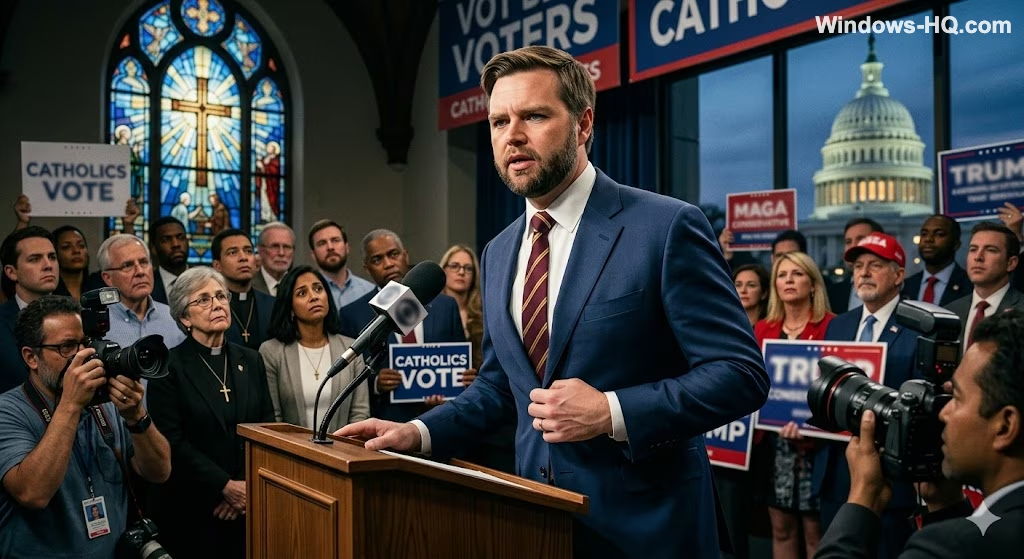
Donald Trump’s public attacks on the head of the Catholic Church, coupled with an AI-generated image depicting himself as a Christ-like figure, have generated controversy. The Catholic Church represents one of the largest groups of swing voters in the United States. Previously, Trump has frequently portrayed himself as a modern messiah, a comparison some supporters have drawn to Jesus Christ.
Pope Leo XIV recently addressed global conflict, stating, “God does not bless any conflict,” and advised that a disciple of Christ, the Prince of Peace, is not on the side of those who drop bombs. The Pope also spoke out against the “delusion of omnipotence.”
These statements were widely interpreted as a rebuke of the Trump administration, which has reportedly framed its warmongering actions in religious terms. On Sunday, Trump attacked the pope on Truth Social, labeling him “WEAK on Crime, and terrible for Foreign Policy.” Following this, the president posted (and later deleted) an AI-generated image of himself as a Jesus-like figure. Sean Hannity, a Fox News anchor and Trump’s friend, joined the criticisms, stating, “I hate the pope.”
Pope Leo XIV responded to Trump’s comments by declaring, “Blessed are the peacemakers,” and asserting that he was “not afraid of the Trump administration or of speaking out loudly about the message of the Gospel.” Reports indicate that a majority of Catholics disapprove of Trump’s handling of the war on Iran, and the Christ-like image did not receive positive reception, despite Trump claiming it was meant to show him as a doctor.
Experts note that alienating Catholics is not viewed as a smart political move, as they are considered major religious swing voters. While Trump won the Catholic vote by a significant margin in 2024, his handling of the situation has complicated matters for his vice-president, JD Vance. Vance’s initial silence drew criticism from Denise Murphy McGraw, national co-chair of Catholics Vote Common Good, who called his silence