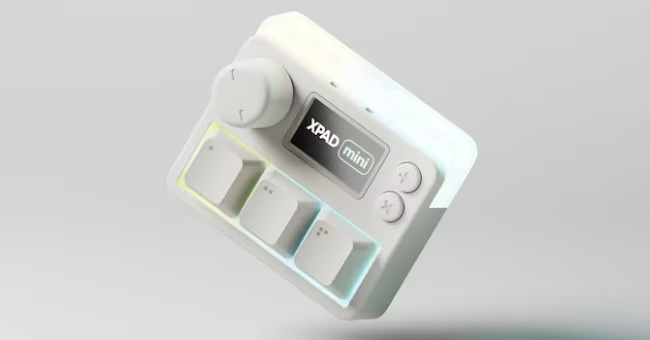
The Pulsar XPAD Mini is a specialized, three-key magnetic gaming keypad designed primarily for rhythm game enthusiasts. TechPowerUp awarded the device a perfect 10/10 score, a standing critique amidst varied reviews of similar gaming gear.
The keypad’s deliberate niche focus features three magnetic switches, a dial, and a compact LCD screen for on-device settings management. Operation relies on a web driver for peripheral function.
The core components are Pulsar’s Gravity-S01 linear magnetic units. These units offer a total travel of 4.0±0.3mm and are rated for a durability of 150 million keystrokes. The system boasts flagship specifications: 8,000Hz polling rate, Rapid Trigger functionality, and an actuation point adjustable down to 0.01mm.
That adjustable actuation point is key to the device’s purpose. Rhythm game players require keys that register the instant they move and reset instantly upon release; magnetic switches facilitate this precision.
Size is another factor differentiating the XPAD Mini. It measures roughly 67×57×32mm and weighs approximately 51g. This makes it one of the smallest keypads available for desk placement. The compact design is intended to sit next to a mouse, giving the user three dedicated keys and a dial without requiring arm movement from the main keyboard.
Two auxiliary buttons are included alongside the three main keys. The LCD screen further aids in profile switching and setting adjustments, reducing reliance on external software.
However, build quality has drawn mixed reviews. One post from a Chinese forum noted that the