The CORSAIR FRAME 4000D WOOD RS and FRAME 4000X RS represent the newest additions to CORSAIR’s FRAME family, targeting modern DIY builders who prioritize both aesthetics and flexibility. While both are positioned in the mid-tower category, they expand the platform’s appeal with distinct design directions.
The core philosophy of the series remains adaptability and performance. A defining feature across both cases is their high degree of modularity. Utilizing the FRAME Modular Case System, users can swap out panels, adjust internal layouts, and tailor the chassis extensively. Components such as front panels, motherboard trays, and I/O modules can be reconfigured or replaced entirely, allowing the case to function more like a build platform than a fixed enclosure.
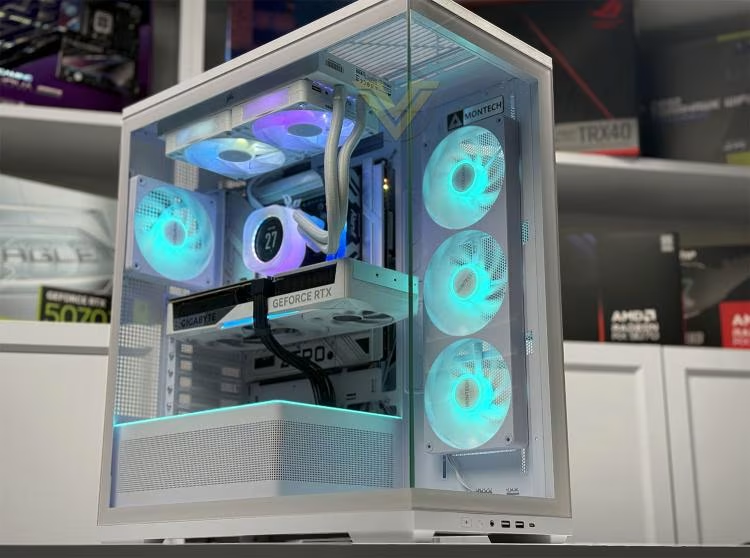
This modularity is complemented by a robust focus on cooling and airflow. Both cases support extensive radiator and fan configurations, including multiple 360mm radiator mounting positions and a capacity of up to 13 fan mounts. Furthermore, the inclusion of CORSAIR’s InfiniRail fan mounting system provides precise fan placement, giving builders fine control over airflow paths. Out of the box, both variants ship with RS120 fans, ensuring solid thermal performance from the outset. Tempered glass panels and PSU shrouds are included to maintain clean and showcase-ready builds.
Crucially, the two models share an identical internal architecture. Both the 4000X RS and the 4000D WOOD RS utilize the same FRAME modular architecture, meaning the internal layout, mounting system, and overall build process are consistent. Features like the adjustable motherboard tray elements and the InfiniRail fan mounting system ensure that the internal experience remains highly capable and unified regardless of the chosen version.
In terms of usability, the cases are reported to be exceptionally easy to work in. Thoughtful additions include pre-installed PSU thumbscrews, generous cable routing channels, and ample tie-down points, making cable management straightforward. Practical features such as a GPU anti-sag bracket and a future-proof front panel connectivity option—a USB 3.2 Gen2x2 Type-C port—further enhance their utility.
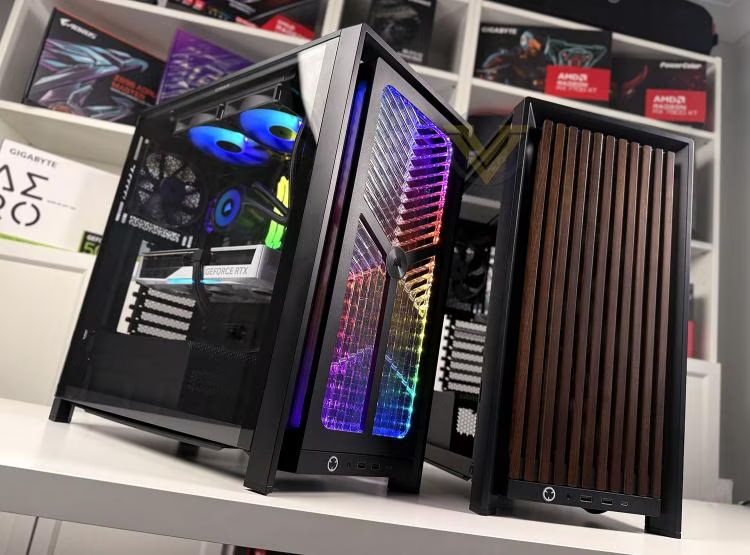
Where the models diverge is solely in their external visual identity. The FRAME 4000X RS embraces a traditional gaming aesthetic, featuring an RGB-lit front panel that pairs well with illuminated components. Conversely, the FRAME 4000D WOOD RS adopts a refined approach by incorporating real wood accents, offering a warmer and more understated elegance. This allows users to select based on whether they prefer vibrant lighting or a sophisticated, minimalist style, while maintaining identical internal capabilities.
Minor drawbacks noted in the review include the absence of a top dust filter for dust-prone environments and the side panels being slightly fiddly to remove and reattach. Despite these small compromises, the combination of strong cooling performance, excellent usability, and modular design positions both the FRAME 4000X RS and 4000D WOOD RS as highly versatile options in the current case market.