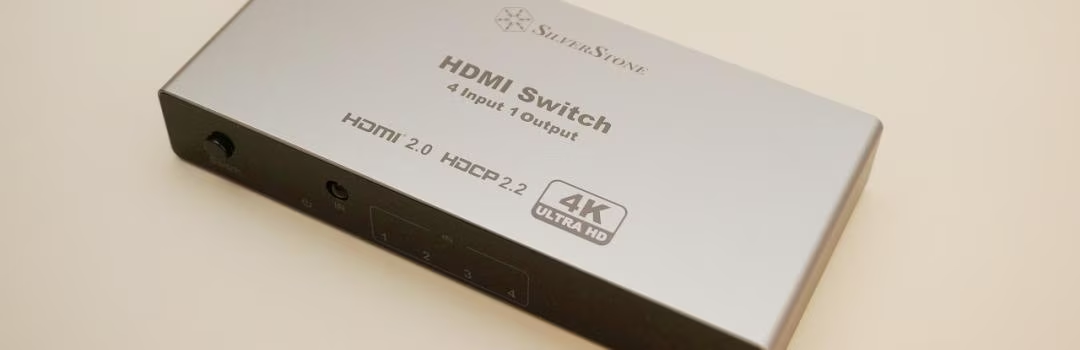
The SilverStone HSW41 is an HDMI switch designed to manage the video outputs of multiple computers sharing a single display. The reviewer, a software developer for embedded systems, noted that building powerful dedicated build servers is expensive due to skyrocketing prices for components like RAM and SSDs. As a solution, the reviewer advocates for using multiple less powerful computers simultaneously to run builds, and the HSW41 helps solve the challenge of managing the video outputs from these multiple sources with a single monitor.
Based on the specifications, the HSW41 model number is SST-HSW41. It features a construction of Aluminum and Plastic material. The unit supports a resolution of 4K/60Hz, utilizing downscaling to 1080p. It is equipped with a red-activate LED indicator. Key specifications include a Type-C cable length of 100mm+-10mm, an IC controller of LN18136G+QFN76, and HDMI 2.0 compatibility, which is backward compatible with HDMI 1.4 and HDMI 1.3. The switch supports HDR10 and can manage up to 4 sources and 1 display output.
Dimensionally, the unit measures 138mm in width, 20mm in height, and 65mm in depth, with a net weight of 165.2g.
Regarding its performance, the HSW41 was described as a good product from SilverStone. The reviewer praised the design, calling it sleek and low-key. The build quality was considered excellent, with the brushed aluminum finished case providing a premium feel. The physical components, including the input switch button, were noted for their good feel and satisfying response. The LED input port indicator was effective, aided by clear labeling on the front panel, which facilitates easy selection of the active input.
Testing revealed no connection stability issues across all five ports (four inputs and one output). The unit performed as expected in daily use, providing quick switching between multiple computers. Its versatility was demonstrated by successfully handling a PS5 and 4K TV setup. The reviewer also found the included remote controller to be a convenient addition, particularly useful if the switch is placed out of easy reach.
Minor suggestions for improvement included differentiating the infrared sensor from the switch button, as both are black and located closely together on the front panel, increasing the risk of accidental activation of the sensor instead of the intended button.
In conclusion, while the price of around $55 USD was considered high for an HDMI switch, the reviewer concluded that the cost is justified by the solid build quality, clean design, good port layout, remote control support, and smooth overall user experience.