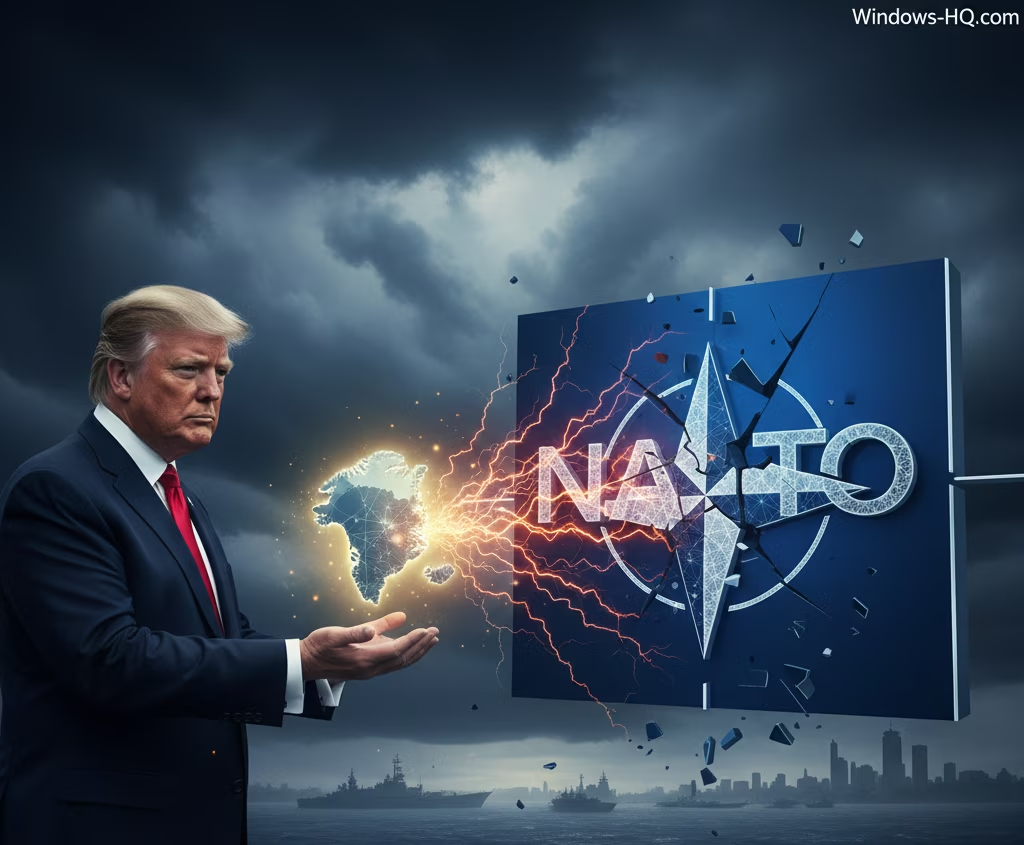
President Donald Trump‘s renewed interest in imposing tariffs and his past inquiries about purchasing Greenland are raising concerns about the stability of the North Atlantic Treaty Organization (NATO) and the future of transatlantic relations. Experts warn that such policies could trigger a downward spiral, undermining the alliance’s unity and defense capabilities.
The potential for new tariffs, particularly on European goods, has sparked fears of a trade war that could strain diplomatic ties between the United States and its NATO allies. These economic tensions come at a critical time, as NATO faces increasing challenges from Russia and other geopolitical rivals.
Adding to the unease is the resurfacing of Trump’s previous interest in acquiring Greenland. While seemingly unconventional, this interest highlights a differing perspective on strategic assets and defense priorities. Such ideas, coupled with tariff threats, could be perceived by allies as a transactional approach to security, rather than a commitment to collective defense.
NATO’s strength relies heavily on the solidarity and mutual trust among its member states. Imposing tariffs would not only harm the economies of allied nations but could also be interpreted as a sign of dwindling American commitment to the alliance.
The implications of weakened transatlantic relations extend beyond economics. Reduced cooperation in defense spending, intelligence sharing, and joint military operations could leave NATO less prepared to respond to emerging threats.
Furthermore, some analysts suggest that a weakened NATO could embolden adversaries and create a more unstable global security environment. The imposition of tariffs could potentially lead to a fragmented defense posture, thereby undermining the core principles of collective security.
Defense experts are urging caution, emphasizing the importance of maintaining strong diplomatic and economic ties with NATO allies. They argue that a unified front is essential to deter aggression and safeguard shared security interests.
The current situation underscores the complex interplay between economic policy, diplomatic relations, and security concerns within the NATO alliance. Navigating these challenges will require careful consideration and a commitment to fostering cooperation and understanding among member states.
Moving forward, it is crucial for all parties to engage in constructive dialogue and prioritize the long-term stability of the transatlantic alliance. Open communication and a willingness to address concerns can help mitigate the risks posed by potential tariffs and differing strategic perspectives.
Ultimately, the strength and effectiveness of NATO depend on the collective commitment of its members to uphold shared values and defend common interests. Preserving this unity is paramount in the face of evolving global challenges.