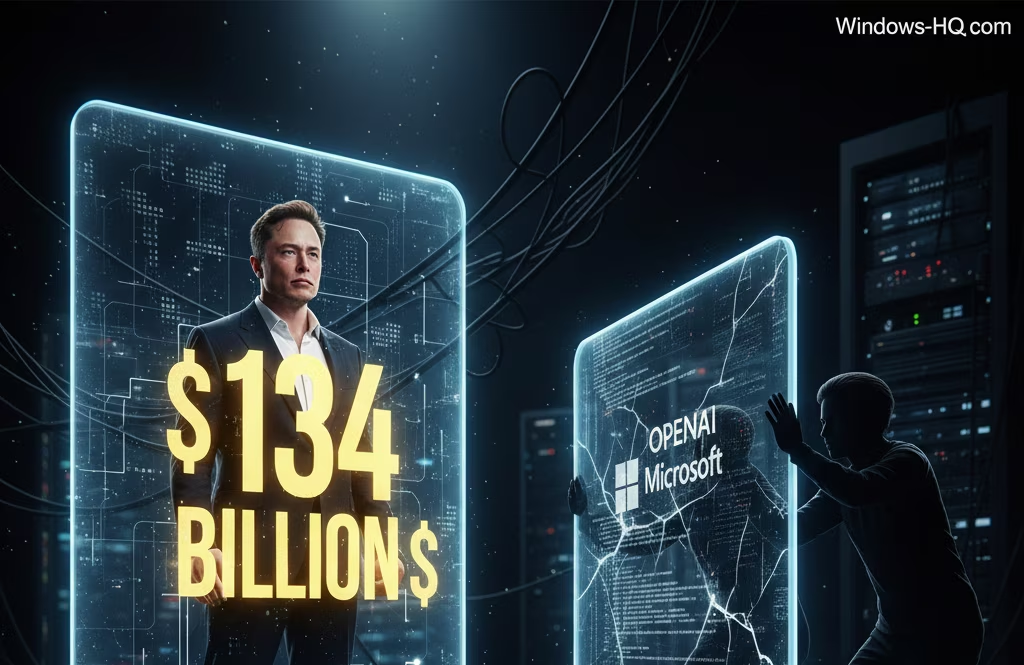
Elon Musk, a co-founder of OpenAI, is reportedly seeking a substantial $134 billion payout from the company and its partner, Microsoft. This demand stems from Musk’s belief that OpenAI has deviated from its original mission of developing artificial general intelligence (AGI) for the benefit of humanity, instead prioritizing profit through its close collaboration with Microsoft.
Musk’s grievances center around the exclusive licensing agreement between OpenAI and Microsoft, which grants the tech giant privileged access to OpenAI’s advanced AI models, including GPT-4. He argues that this arrangement transforms OpenAI into a de facto for-profit subsidiary of Microsoft, contradicting the non-profit principles upon which the company was founded. Musk contends that the pursuit of financial gain compromises OpenAI’s commitment to open-source development and the responsible deployment of AGI.
The $134 billion figure is purportedly based on Musk’s assessment of the potential future value of OpenAI’s technology and its contribution to Microsoft’s bottom line. While the exact details of Musk’s legal strategy remain unclear, it’s anticipated that he will leverage his initial investment in OpenAI and his vocal criticism of the company’s current direction to bolster his claims.
The dispute highlights the growing tensions within the AI community regarding the ethical and societal implications of rapidly advancing AI technologies. Concerns are mounting about the concentration of power in the hands of a few large corporations and the potential for AI to be used for harmful purposes. Musk has consistently voiced his apprehensions about the unchecked development of AI and has advocated for greater transparency and regulatory oversight.
The outcome of Musk’s pursuit could have significant ramifications for the future of OpenAI and the broader AI landscape. If successful, it could force OpenAI to reconsider its partnership with Microsoft and adopt a more open and collaborative approach to AI development. Conversely, a defeat could solidify the current trajectory, potentially leading to further consolidation of AI power within the tech industry.