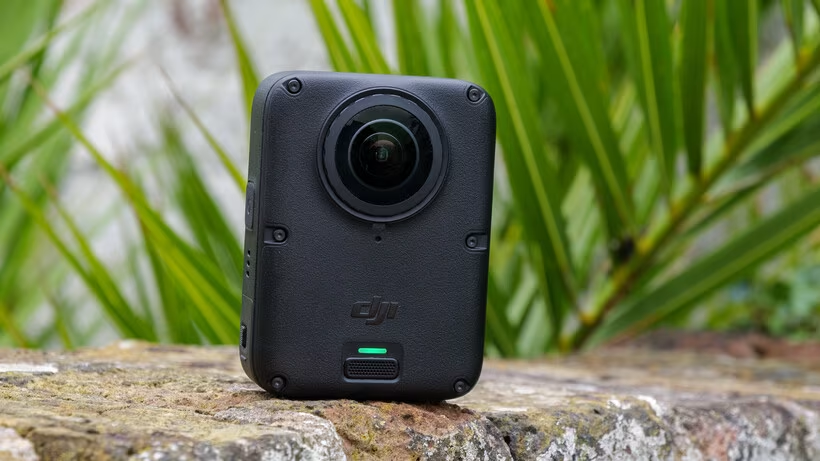
DJI has introduced the second-generation Osmo 360 II, a 360-degree camera that builds upon its predecessor while offering several key upgrades. The unit is available in two packages: the Standard Combo for £509 and the Adventure Combo for £639. This price point makes it cost £100 less than its direct competitor, the Insta360 X6.
Addressing criticisms of the original model, the Osmo 360 II makes lenses user-replaceable. A replacement kit costs £35, a design change that prevents users from having to send the entire camera unit for repair due to a damaged lens.
Furthermore, DJI improved the camera’s underwater capability. While maintaining the 10-metre waterproofing rating, improved imaging software now better handles how light behaves beneath the surface. The camera maintains an IP68 rating, keeping it waterproof up to 10 metres even without an extra case.
Design specifications remain largely the same as the original. The Osmo 360 II weighs 183g, keeps the same dimensions, and features the same screen, mounting options, and button layout. The lenses now include a tougher coating.
Performance upgrades are visible in the camera’s technical specifications. The battery capacity increased slightly, growing from 1950mAh to 2150mAh. These batteries are interchangeable with earlier Osmo 360 models and recent DJI Osmo Action cameras. Under DJI’s claim, the camera provides 100 minutes of 8K/30fps recording on a single charge, a figure matched during reviewer testing.
However, users should note a limitation regarding extreme settings. Pushing the camera to its limits with 8K/60fps recording triggers an overheating warning, causing the unit to shut down after approximately 20 minutes of continuous recording at room temperature without airflow.
Image quality saw major technical boosts. The Osmo 360 II is the first 360 camera available to record native 8K video at 60fps, surpassing the Insta360 X6, which tops out at 8K/50fps. Dynamic range increased from 13.5 to 14.5 stops. The slow-motion capability doubled its frame rate to 4K/240fps, and timelapse resolution increased to 16K/30fps.
DJI also upgraded the SuperNight low-light mode to version 2.0. This update yields noticeably cleaner and sharper results in low light, up to 60fps, though it cannot be used with the D-Log M color profile.
Audio features include four built-in microphones, plus support for connecting to DJI’s Mic range for 24-bit audio through the OsmoAudio ecosystem. The accompanying software includes the DJI Mimo mobile app, which offers AI-assisted auto-editing. Separately, the DJI Studio desktop app provides excellent subject tracking and a 64x slow-motion mode via frame interpolation, although it lacks AI smart features.
The sensor appears virtually identical to the one used in the original Osmo 360, suggesting the improvements are primarily due to enhanced processing. Despite the hardware similarity, the review noted that the camera delivers genuinely impressive night shots with careful use. Daylight footage, by comparison, is sharper and punchier than low-light capture.
The review concludes that the Osmo 360 II refines the original design, addressing key issues while enhancing performance. For existing owners of the Osmo 360, an upgrade is suggested only if the specific new features are needed. At £509, the camera offers class-leading 8K/60fps video and tougher lenses, positioning it as one of the best 360 cameras available today.