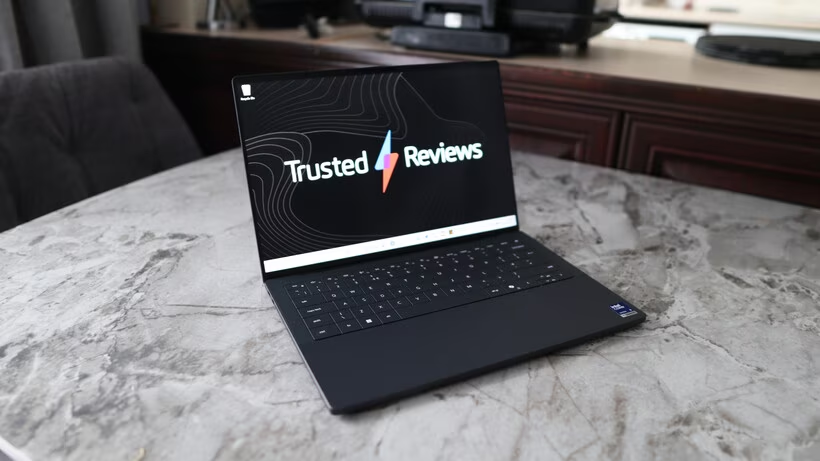
The Dell XPS 14 (2026) is a redesigned Windows ultrabook with a sharp, modern look. It revives the classic Dell name for the brand’s slim ultrabooks, following a period of deviation.
The chassis design has been redesigned to give it an industrial chic appearance, similar to modern MacBook Pros or Dell’s own business laptops. The unit weighs 1.36kg, making it portable, though slightly heavier than some competitors like the sub-1kg Asus Zenbook models.
In terms of specifications, the base model reviewed is equipped with an Intel Core Ultra 5 325 processor, 16GB of RAM, and a 512GB SSD. It features a 70Whr battery and operates on Windows 11.
The user can choose between two screen options: a 14-inch 2K resolution (1920×1200) LCD or a 2.8K resolution (2880×1800) OLED panel, both offering up to a 120Hz refresh rate. The base model sample shipped with the 1920×1200 IPS screen, which offered a perfect 6500K color temperature and solid contrast (1950:1 contrast ratio).
The laptop’s performance can scale up to an Intel Core X7 358H chip, utilizing the new Panther Lake chips with the Arc B390 iGPU. However, the reviewed base model utilized the eight-core Intel Core Ultra 5 325 processor, identified as the Panther Lake successor to the Lunar Lake Core Ultra 200V chips.
Regarding pricing, the base model starts at £1599.99/$1699.99, with higher-end configurations reaching £2000/$2000 or more. This puts it on par with models such as the Asus Zenbook A14 (2026) and the Acer Swift Edge 14 AI.
Dell has equipped the unit with a larger 70Whr battery. When tested in the PCMark 10 Modern Office battery test at 150 nits, the laptop achieved an endurance of 15 hours and 38 minutes, suggesting approximately two working days away from power.
The laptop also features a 100W charger, which restored 50% charge in 35 minutes and required a total of 70 minutes for a full charge.
While generally praised for its look, battery life, and decent screen, the reviewer notes that the base model makes compromises in port selection, overall performance, and display quality when compared to rivals.
Competitors raise concerns, notably the Asus Zenbook A14 (2026). This rival costs the same as the base XPS model but offers longer battery life, more power via its Qualcomm Snapdragon X2 Elite processor, a more varied port selection, and is 400g lighter than the XPS 14 (2026).
The Acer Swift Edge 14 AI was also noted as a competitor, offering a strong port selection and comparable battery life while being lighter than the Dell choice. Overall, the XPS 14 (2026) is considered slightly harder to recommend in its current configuration compared to its beefier options or competing ultrabooks.