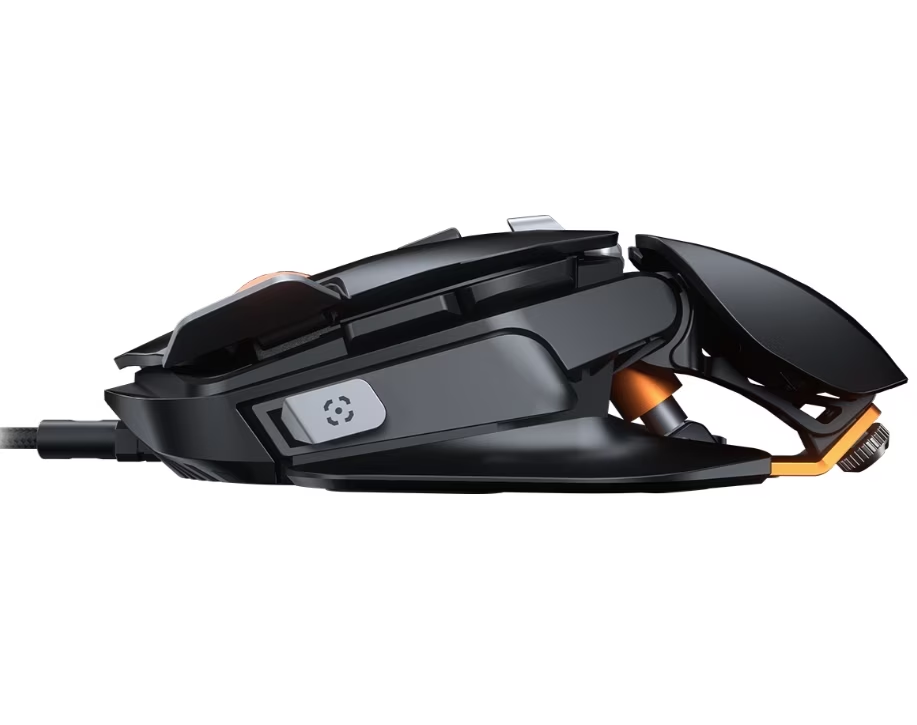
The COUGAR DUALBLADER gaming mouse offers a high level of customization compared to newer models that often rely on older, tried-and-tested designs. A key component of this customization is the DYNASTRUT feature, which allows the mouse to be raised or lowered to suit individual preferences. Additionally, it includes a separate adjustment for the palm rest, a design element reminiscent of older Mad Catz mice.
Depending on the accessories fitted to the device, the mouse weighs between 99 grams and 107 grams. This places it outside the category of the lightest gaming mice available on the market.
The device is equipped with a PMW3389 optical gaming sensor. While this sensor is an older model with a maximum DPI of 16000, it provides enough capability for most mainstream users.
When the mouse is adjusted correctly and the buttons are installed according to the provided instructions, the device remains comfortable over extended gaming sessions. Furthermore, the Fire buttons remain stable and do not wobble at all.
For software configuration, the mouse uses the COUGAR UIX interface. The Key Assignment area of this software borrows graphical elements from older Mad Catz interfaces, while the remaining configuration options are straightforward and easily understandable.
During testing, the mouse was used to play titles such as Silent Hill f, Mafia: The Old Country, and Dying Light: The Beast. It tracked flawlessly on a CHERRY XTRFY mouse pad. However, the weight of the mouse prevented the execution of very fast actions that are typically possible on much lighter mice.
The mouse features an ULTRAFLEX cable, which is slightly more rigid than paracord-type cables. Given the overall weight of the mouse, this rigidity is not immediately bothersome during use.
Currently, the COUGAR DUALBLADER is available online for approximately 98 Euros. At this price point, it is considered a bit pricey within the highly competitive gaming peripheral market, prompting hopes for a future updated version featuring a lighter chassis and a newer sensor.