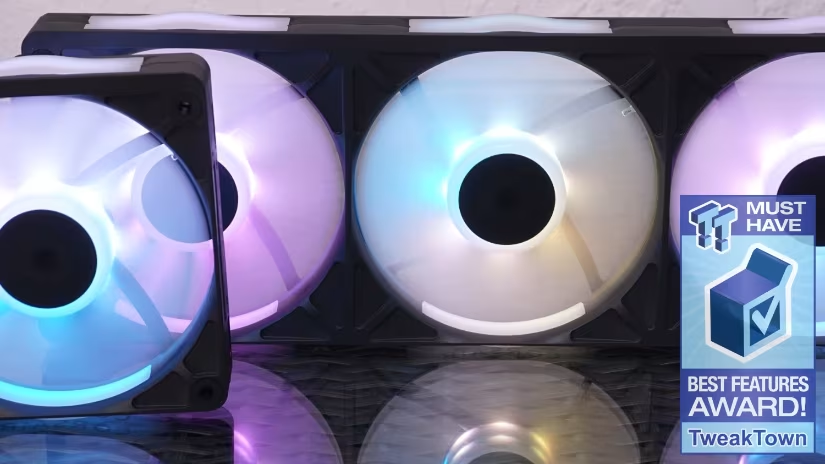
Corsair introduced the iCUE LINK RX360 II Unified Frame RGB PWM and RX120 II RGB PWM Expansion Fans, presenting an advanced system into the premium fan market. The TweakTown review awarded the setup an overall rating of 90%, highlighting its impressive build quality and feature set. However, the report cautioned that the proprietary nature and high cost may limit its appeal to users outside the Corsair ecosystem.
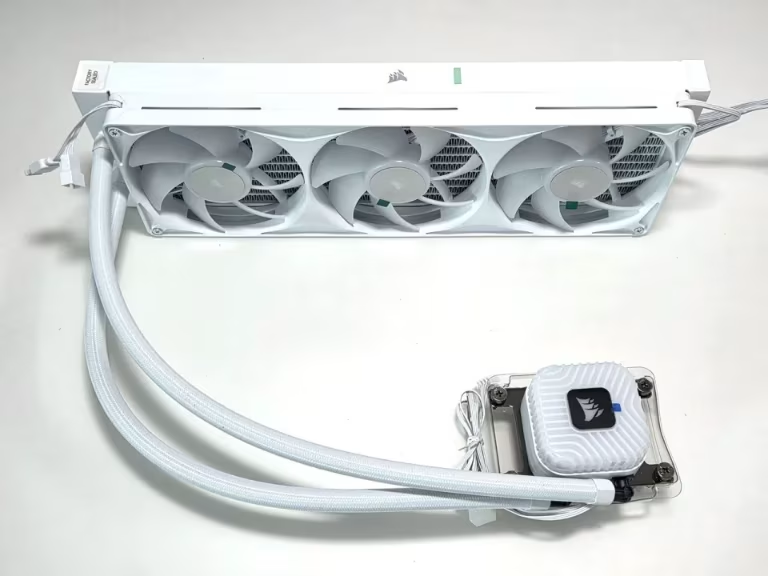
The core components include the RX360 II, a unified frame housing three 120mm fans, measuring 360 x 129 x 26mm. This fan unit operates at 400 to 2100 RPM and delivers up to 64.72 CFM of airflow, alongside 3.57 mmH₂O of static pressure. The standalone RX120 II shares these specifications but is a smaller, independent unit (120 x 129 x 26mm), drawing 0.46A compared to the RX360 II’s 1.39A. Both units carry a five-year warranty.
Installation of the unified frame is straightforward, requiring only four screws. Aesthetic customization is possible through removable side plates, which users can leave out or replace with 3D-printed options not currently sold as accessories by Corsair. The fan assembly packaging includes the iCUE LINK System Hub, which is mandatory for full functionality. Functioning requires Windows 11 and iCUE 5 or newer, plus an open native USB 2.0 header and an extra 6-pin PCIe power plug.
Performance testing revealed varied results depending on the iCUE profile selected. In Quiet mode, the fans idled down to around 400 RPM before Zero RPM mode engaged, offering near-zero noise while lighting remained active. Balanced mode operated between 400 and 410 RPM at idle, reaching 740 RPM under load while producing 23 dB. Extreme mode increased idle speeds to 830 to 840 RPM at 24 dB, climbing to 1050 RPM and 29 dB under load. The reviewer determined Extreme mode provided the best combination of airflow, pressure, and noise.
At maximum output (100%), the fans reach 2118 to 2140 RPM, generating 67 dB and the full 64 CFM and 3.5 mmH₂O. This high performance comes at a substantial acoustic cost. The reviewer suggested creating a custom fan curve to balance performance and noise, although Extreme mode reportedly delivers only around 30 CFM and 1.5 mmH₂O under sustained heavy loads.
Build quality received a high score of 99%, praising the robust construction and magnetic dome bearings. The feature score was also 99%, acknowledging the extensive control provided by the iCUE software, the unified frame design, and the swappable side plates. The ARGB lighting is noted as bright and capable of illuminating a chassis and office, although the intensity can cause visible hotspots.
The primary obstacle cited by the review is the cost. The full RX360 II setup, including the iCUE LINK System Hub, is priced at $99.99. The standalone hub costs $59.99, while the RX120 II expansion fan sells for $34.99. The reviewer noted that even purchasing the cheapest entry point—a standalone hub and single RX120 II—totals $94.98, suggesting the ecosystem is costly for many users.
The iCUE LINK system is proprietary throughout. While this limits non-Corsair users, existing LINK users benefit from the ability to daisy-chain the fans with other Corsair components, a major advantage. For current Corsair LINK users looking to expand their setup, the RX II series is recommended. However, the review concluded that for users not already invested in the system, the proprietary connectivity and high entry cost may steer them toward competing products.