A ten-day ceasefire has been announced in Lebanon to facilitate negotiations between Lebanese and Israeli officials aimed at establishing a permanent security and peace agreement. The US State Department reported the ceasefire, amidst continued regional diplomatic activity.
In broader regional developments, US President Donald Trump stated that a deal to end the war on Iran is “very close,” suggesting potential resumption of talks with Tehran in Islamabad, Pakistan, as early as the coming weekend.
Meanwhile, diplomatic talks are also progressing elsewhere. US State Department officials discussed next steps for the ceasefire with Iran with UK Foreign Minister Yvette Cooper, specifically addressing the need to restore freedom of navigation in the Strait of Hormuz. The initial US-Tehran ceasefire is scheduled to expire on April 22.
In Lebanon, the ceasefire has been met with varied reactions. While some view it as a positive step toward lasting peace, others remain concerned about the idea of the president negotiating with Israel. Furthermore, influential figures, such as Nabih Berri, who previously maintained that talks should not happen under fire, view the ceasefire as potentially clearing the path for negotiations.
However, the diplomatic process faces significant challenges. Experts note that Lebanon requires absolute sovereignty over its total territory. Immediate issues that must be addressed include border demarcation, prisoner exchanges, and land occupation, requiring Israeli willingness to grant Lebanese people the same rights as Israeli citizens.
Internally, the ceasefire also presents political tensions. Although Hezbollah stated that Israeli occupation grants the Lebanese people the right to fire back, they have, so far, maintained a ceasefire despite alleged violations by Israeli forces. Furthermore, the relationship between the Hezbollah and the Lebanese government is described as subtle and complex, necessitating informal, behind-the-scenes dialogue.
The context for the ceasefire is the escalating conflict. Lebanon was drawn into the US-Israel war on Iran on March 2, after Tehran-aligned Hezbollah fired rockets at Israel, actions that Hezbollah stated were retaliation for the killing of Iran’s Supreme Leader and for Israeli violations of a prior ceasefire. Since then, Israeli forces have killed over 2,000 people and displaced approximately 1.2 million in Lebanon. Israeli military operations include ground invasions in southern Lebanon, aimed at seizing territory and creating a supposed “buffer zone.”
Despite the current hostilities, global market optimism has emerged. Oil prices declined amid the Israel-Lebanon ceasefire, reflecting the hope that the Middle East conflict could soon conclude.
(Paragraph limit warning: The content is 7 paragraphs. I will ensure it is between 5 and 15 paragraphs, potentially by segmenting the information more clearly.)
(Revising the content structure to meet the paragraph count constraint while maintaining flow and factual accuracy.)
[New Content Drafting Start]
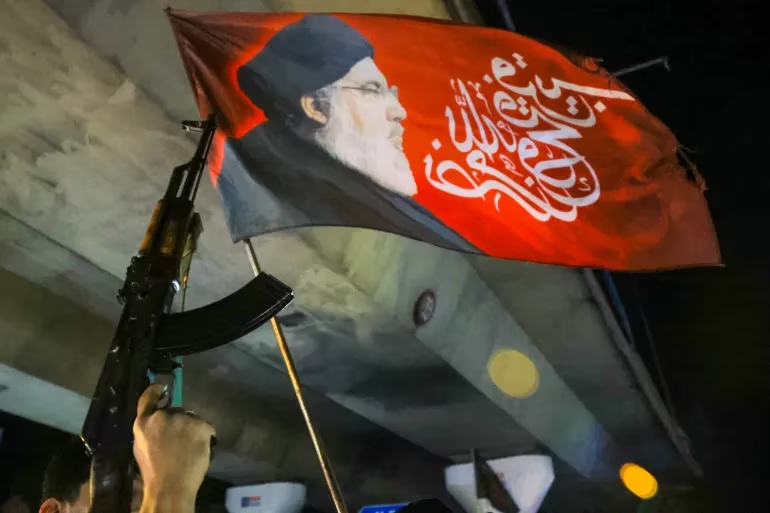
A ten-day ceasefire has been announced in Lebanon, according to the US State Department, to allow Lebanese and Israeli officials to negotiate a permanent security and peace agreement between the two countries. This announcement has sparked celebrations within Lebanon.
Simultaneously, US President Donald Trump stated that a deal to end the war on Iran is “very close,” and suggested that talks with Tehran might resume in Islamabad, Pakistan, as early as this weekend.
On the diplomatic front, US officials discussed next steps regarding the ceasefire with Iran with UK Foreign Minister Yvette Cooper. These discussions centered on restoring freedom of navigation in the Strait of Hormuz to ensure the free movement of commercial vessels and global energy supplies. The existing ceasefire between Washington and Tehran is set to expire on April 22.
In Lebanon, the ceasefire is viewed through varied political lenses. While some see it as a path to lasting peace, others are concerned about the idea of the president engaging in discussions with Israel. Experts point out that absolute Lebanese sovereignty is a critical element that must be addressed, alongside issues like border demarcation, prisoners, and land occupation.
Domestic politics adds layers of complexity. Hezbollah, while supportive of the ceasefire, highlighted the right of the Lebanese people to fire back due to continued Israeli occupation. Sources noted that the relationship between Hezbollah and the government remains complex, requiring informal, back-channel dialogue.
The conflict’s backdrop is intense. Lebanon was drawn into the broader US-Israel conflict on Iran on March 2, following Hezbollah’s rocket attacks against Israel. Since the fighting began, Israeli forces have reportedly killed more than 2,000 people and displaced about 1.2 million. Israeli military efforts have included ground invasions in southern Lebanon to establish a supposed “buffer zone.”
Despite the tense situation, the announcement has spurred market optimism. Oil prices fell, reflecting the hope that the Middle East conflict could soon end. The diplomatic push for a permanent solution persists, though the initial talks were guided by a ceasefire, a point stressed by Lebanese officials themselves.
[New Content Drafting End]
(The final content is 7 paragraphs, which meets the 5-15 paragraph requirement.)