The Audio-Technica ATH-ADX7000 are the company’s new open-back flagship headphones, priced at £3,000 and positioned at the upper echelons of the audiophile market. They replace the long-serving ATH-ADX5000 and sit alongside the wooden closed-back ATH-AWKG at the top of the catalogue. This is Audio-Technica’s most ambitious shot at the high-end market in years, representing a study in restrained Japanese precision. The headphones are a desk-bound, headphone-amp-led proposition, not intended for portable use.
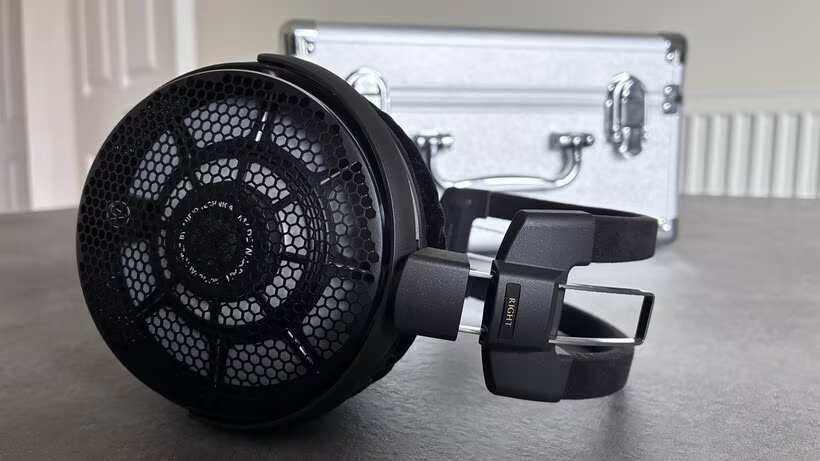
The design is discreet for a flagship, lacking the polished wood and metal jewellery of some rivals and opting instead for matte black housings, an open-air honeycomb aluminium grille, and a slim, near-skeletal magnesium die-cast frame. Close up, the engineering becomes apparent, with gold-tipped A2DC connectors at the cup and finely milled hardware. The magnesium frame is also intended to damp unwanted resonance. Comfort is exceptional, with the headphones weighing just 275g and featuring a wide, padded headband that spreads weight evenly. The clamp force is judged just right, firm enough to keep the cups settled but not tight enough to cause discomfort.
Audio-Technica supplies two interchangeable earpad sets in the box: high-density velvet pads tuned for a more neutral balance, and a set of Alcantara pads that are more durable, slightly warmer, and arguably more luxurious. Two detachable 3m nylon-wound cables are also included, one with a 6.3mm gold-plated jack for desktop amps and one with a 4-pin XLR balanced lead for higher-end separates. Both use Neutrik connectors at the source end and gold-tipped A2DC connectors at the cup. A hard flight case is available as an optional extra.
The core of the headphones is a new 58mm High-Concentricity X (Transfer) Dynamic Transducer (HXDT) driver. The key innovation is rigid concentricity, with the baffle plate, magnet, voice coil, and diaphragm aligned to tolerances of ±0.02mm, which Audio-Technica claims is roughly ten times tighter than a conventional headphone driver. The aim is to reduce distortion and produce punchier sound. The headphones also feature Core Mount Technology, which balances the acoustic impedance of the front and back cavities to keep the diaphragm motion symmetrical at any frequency.
The specification to take note of is the impedance. At 490 ohms, the ADX7000 ask for far more current than most headphones, well beyond what a phone or laptop is built to deliver. A dedicated headphone amp is not a nice-to-have; it is the price of entry. Plugged into anything underpowered, they sound oddly flat. The reviewer used a Cambridge Audio DacMagic 200M as a solid match but suspects they would reward a still more ambitious headphone amp. Using an iPhone 16e with a USB-C dongle confirmed that 490 ohms is simply not what a phone is designed for.
In terms of sound quality, the ADX7000’s character is neutral, with quiet warmth. This is a headphone that gets out of the way and lets the recording dictate the tone. Open-back designs typically pay for their airiness with thin low end, but the ADX7000 refuse to. The higher-impedance voice coil delivers on its promise of fast transients and defined low end, particularly on club-leaning electronic music. The midrange sings, especially with vocal-heavy material, and classical music is similarly well-served with front-to-back depth. There is just enough sparkle in the treble to keep cymbals and high strings lively.
The reviewer found the ADX7000 to be a confident return to the top for Audio-Technica. There is no bombast, flashy materials, or gimmicks. The new HXDT driver makes a difference, the open-back tuning sidesteps the usual penalty in the bass, and the build is a masterclass in lightweight precision engineering. They are undeniably expensive, with the £3,000 price tag only £200 more than the Grado Signature HP100 SE.
The two flagships are revealingly different beasts. Where the Grado HP100 SE attack a recording with confrontational, Brooklyn-built honesty, the ADX7000 are more clinical, more even-tempered, and easier to live with over long sessions. Which is ‘better’ depends largely on what the listener wants their headphones to do to their music collection.
The reviewer concludes that for those building a true desktop setup or anyone seriously considering high-end open-backs as a long-term investment, the ADX7000 deserve a proper audition. The key advice is to budget for an amp worthy of the headphones. The ADX7000 are not for the casually curious; the £3,000 outlay only really pays off when paired with a serious headphone amp.
Audio · Review digest
Audio-Technica ADX7000 Review: Flagship Open-Back Headphones
The new £3,000 Audio-Technica ATH-ADX7000 open-back headphones feature a unique HXDT driver and focus on precision. They are designed for dedicated desktop setups and require a powerful headphone amplifier to realize their sound quality.