AMD’s platform is noted for its longevity, with Zen 6 potentially supporting one more generation of PCs. For those keeping motherboard costs below US$300, models in the ASUS TUF range are frequently considered.
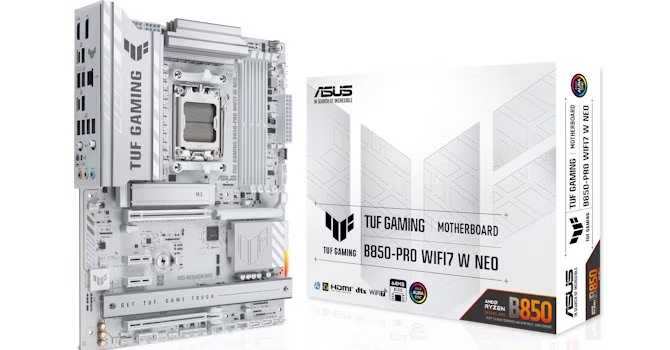
The TUF Gaming B850-Pro Wi-Fi7 W Neo is presented as a modern Socket AM5 motherboard within the TUF line, featuring Wi-Fi 7 and support for PCIe Gen 5 SSD and GPU. It retails for less than $250.
However, reviewers point out that the B850 chipset falls into the mid-range category, often associated with cuts in features and performance, leading some boards to perform poorly compared to others.
The TUF Gaming B850-Pro Wi-Fi7 W Neo offers a 512 Mbit (64 MB) BIOS that includes integrated Wi-Fi driver support, along with cutting-edge EFI and software. When comparing it to older or cheaper B850 TUF Gaming models, the differences are not substantial.
The primary difference noted for the new board is an upgrade from a 10 Gbps Type-C header to 20 Gbps, as well as a tool-free primary M.2 heatsink. This speed increase was previously available on the rear I/O panel and may not represent a significant improvement in practical use.
Overall, besides relocating USB bandwidth, there is little presented as genuinely new about this board, leading some to question if a $40 price increase over the TUF GAMING B850-PLUS WI-FI is justified.
Despite these concerns, the board receives praise for specific features. The modern ASUS EFI is generally rated highly, particularly for overclocking, fan control, and general ease of use. Furthermore, it maintains a decent number of USB ports with varied speeds, keeping costs down while supporting fast external storage.
The unit includes notable baseline features like decent audio support, CMOS clear and USB BIOS flashback buttons—features often omitted in lower-priced models. Omissions include the low 12 W power limit for each fan header, lack of a thermistor input, and insufficient power delivery to the USB Type-C header.
Regarding thermal performance, both the VRMs and SSDs were observed to be noticeably warmer than similar boards tested, such as the ASUS TUF Gaming B850-BTF Wi-Fi W. However, these high temperatures occurred under worst-case testing conditions with minimal airflow.
When considering alternatives, ASRock offers a more affordable option: the ASRock B850 LiveMixer Wi-Fi (less than $200). This alternative boasts ALC4080 audio, Wi-Fi 7, PCIe Gen 5 support, and reportedly exhibits better VRM and SSD temperatures, alongside a USB 3.2 Gen 2×2 20 Gbps Type-C header.
Other suggested alternatives include the MSI MAG B850 Tomahawk Max Wi-Fi ($30 cheaper than its sibling), which also features improved VRM/SSD temps and better fan headers. Additionally, stepping up to X870 chipsets is recommended; the ASRock Phantom Gaming X870 Riptide Wi-Fi costs under $200. Even lower priced options like the MSI MAG X870E Tomahawk Wi-Fi offer superior features such as 27 W power delivery over USB Type-C, USB4, and dual PCIe Gen 5 M.2 ports.
Ultimately, reviewers caution that the premiums on these mid-range refresh boards often do not justify the extra cost, especially when compared to older models or more affordable X870 options that may offer superior features and future-proofing capabilities.