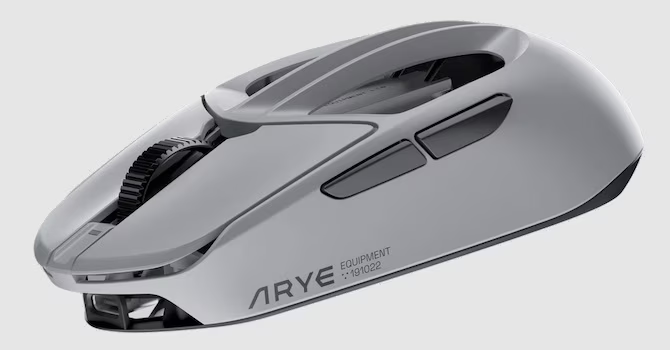
Hong Kong-based gaming peripherals manufacturer ARYE has officially unveiled the RCC-1, a high-performance wireless gaming mouse that pushes the boundaries of lightweight engineering and material science. While the device was initially teased as featuring a full carbon fiber shell, the final production model utilizes a sophisticated material compromise to balance durability with manufacturing feasibility.
The top shell of the RCC-1 is constructed from a specialized composite of carbon fiber and nylon. This hybrid material offers significantly higher rigidity than the standard ABS plastic found in most consumer mice. By utilizing this advanced composite, ARYE has managed to achieve a remarkably low weight of just 48 grams, placing it among the lightest competitive mice on the market today.
Structural integrity was a primary focus during the development of the RCC-1. Thanks to the inherent strength of the carbon-nylon composite, the design team was able to incorporate a large cutout at the top of the frame. Furthermore, the mouse features an open bottom shell design, a feat usually avoided in ultra-lightweight builds to prevent flexing, but made possible here by the reinforced materials.
Under the hood, ARYE has equipped the RCC-1 with industry-leading internals. The mouse is powered by PixArt’s latest PAW3950 flagship sensor. This high-performance optical sensor is capable of reaching up to 32,000 CPI, providing the precision and tracking accuracy required for professional-level esports and high-stakes competitive gaming.
For the main clickers, the RCC-1 employs Omron D2FP-FN2 optical switches. Unlike traditional mechanical switches, these optical variants offer near-instantaneous actuation and are virtually immune to double-clicking issues. This ensures that every input is registered with crisp tactile feedback and maximum reliability over the lifespan of the device.
Wireless performance is another area where the RCC-1 shines. The mouse supports a polling rate of up to 8000 Hz in wireless mode. This ultra-fast communication between the mouse and the PC significantly reduces input latency, providing a smoother and more responsive cursor feel that is increasingly becoming the standard for elite gaming hardware.
To ensure a smooth glide across various surfaces, ARYE has fitted the RCC-1 with feet made of 100% pure PTFE (Polytetrafluoroethylene). These high-grade skates minimize friction, allowing for effortless micro-adjustments and large flick shots during intense gameplay sessions.
Software customization remains a staple of the ARYE ecosystem. Users will have access to a dedicated suite of tools to fine-tune the RCC-1 to their specific preferences. This includes adjusting CPI stages, modifying polling rates, and remapping buttons to suit different gaming genres or productivity workflows.
The transition from a pure carbon fiber shell to a composite material represents an interesting pivot in the boutique mouse market. While carbon fiber is often difficult to mold into complex ergonomic shapes, the nylon-composite blend appears to be a strategic choice that retains the premium feel and strength of the original concept.
Overall, the ARYE RCC-1 stands as a testament to the innovation coming out of the Hong Kong peripherals scene. By combining the PAW3950 sensor, 8K wireless polling, and an unconventional composite frame, ARYE is targeting the most demanding segment of the enthusiast community.