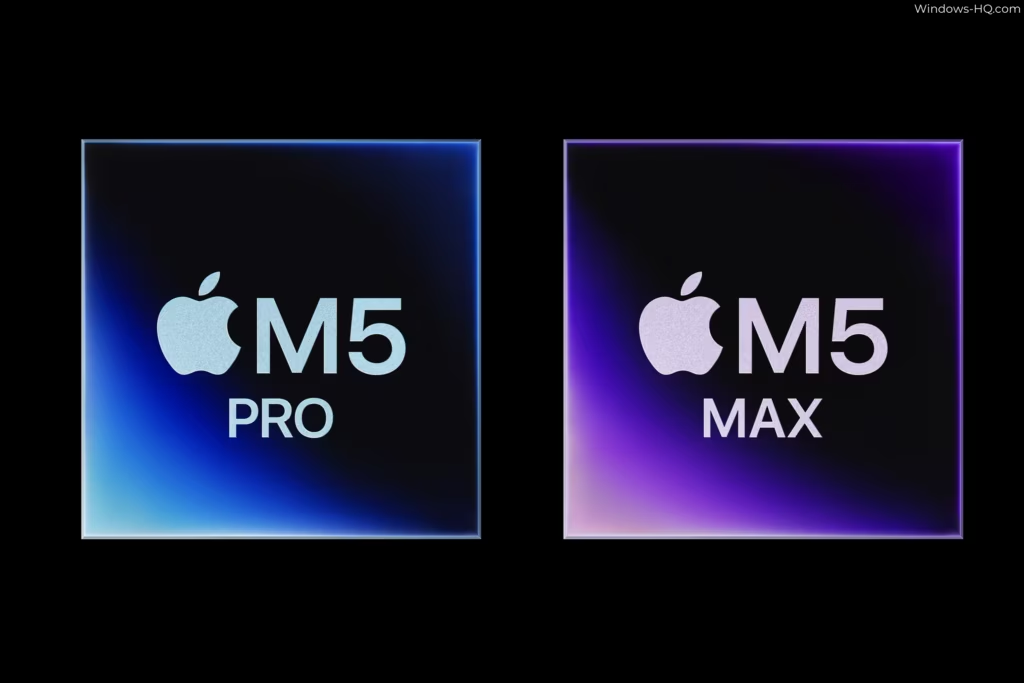
Apple is actively developing its next generation of Apple Silicon, specifically the M5, M5 Pro, and M5 Max chips, as the company continues to refine its proprietary hardware. Following the release of the M4 chip, industry reports indicate that the tech giant is deepening its collaboration with manufacturing partner TSMC to integrate advanced packaging technologies into the M5 lineup. These developments aim to bolster performance and efficiency across future Mac and iPad devices.
A key focus of the M5 development is the utilization of TSMC’s System on Integrated Chip (SoIC) packaging technology. Unlike previous iterations that relied solely on standard packaging methods, the M5 series is expected to employ a hybrid approach. This advanced SoIC architecture allows for three-dimensional stacking of chips, which significantly enhances electrical performance and thermal management. By stacking components vertically, Apple can achieve higher bandwidth and lower latency, essential for the increasing demands of data-intensive applications.
The adoption of this packaging technology reportedly extends beyond simple performance metrics; it is also a strategic move to accommodate the thermal requirements of more powerful processors. The hybrid SoIC packaging relies on thermoplastic carbon fiber composite molding technology, which simplifies production and improves heat dissipation. This architectural shift suggests that the M5 Pro and M5 Max variants will offer substantial gains in sustained performance compared to their predecessors.
Industry analysts project that mass production of the M5 series will commence in the second half of 2025. This timeline aligns with Apple’s established release cadence, suggesting that consumers might see the first devices equipped with these processors late next year or in early 2026. The rollout is expected to cover the full spectrum of Apple’s high-end computing lineup, including the MacBook Pro and potentially high-end desktop configurations.
Furthermore, the development of the M5 chip is closely tied to Apple’s broader artificial intelligence strategy. With the growing integration of AI features in macOS and iPadOS, the improved neural engine capabilities and memory bandwidth provided by the new packaging architecture will be critical. There are also indications that Apple may leverage versions of these high-performance chips for its own AI cloud infrastructure, ensuring that complex processing tasks are handled efficiently within its own ecosystem.