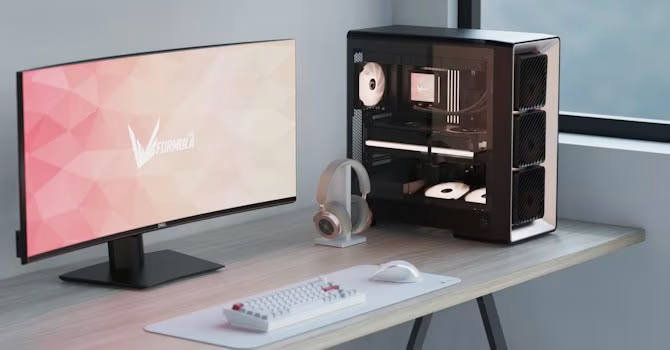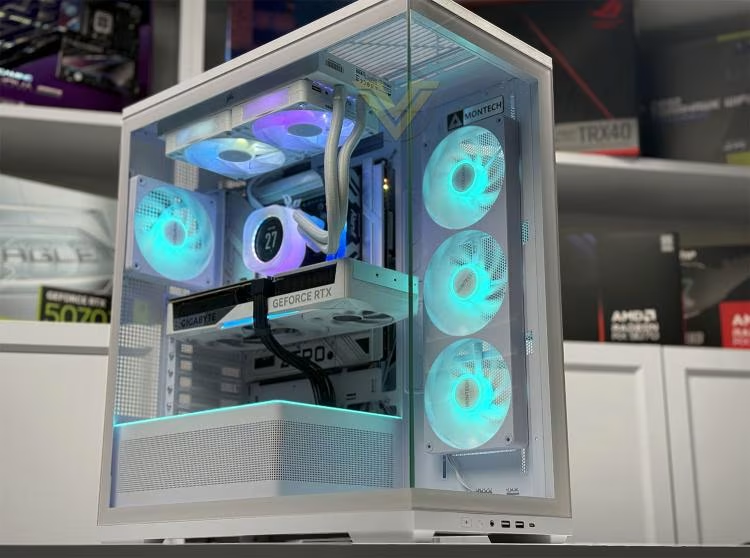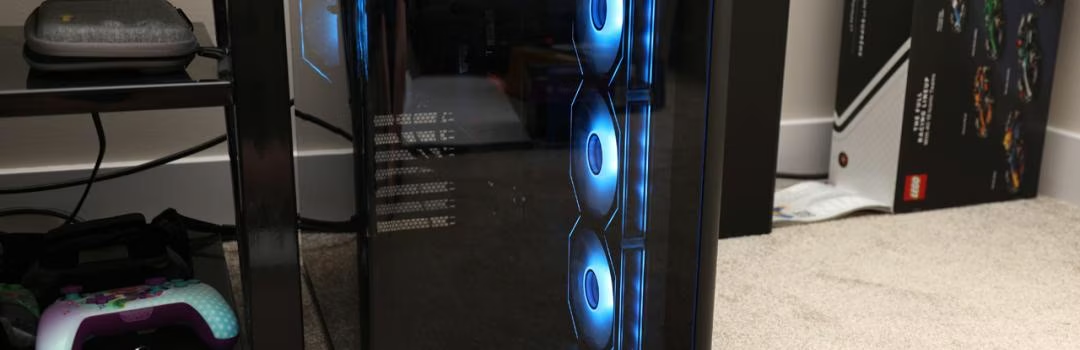
The FSP M580 is a mid-tower ATX computer case noted for its aesthetic design, featuring 270° curved glass and four mirror-finished ARGB fans. It is characterized as being short and wide, while maintaining compatibility with ATX, M-ATX, and Mini-ITX motherboards. The case is constructed using 0.7mm SPCC and weighs 7.5kg.
Key technical specifications include support for up to 7 expansion slots and a maximum graphics card length of 445mm. The internal design accommodates two spots for 360mm radiators, and it features external I/O ports for two USB3.0 ports and one Type-C port. Power supply units must be ATX and can be up to 240mm in length.
Regarding cooling, the M580 includes three pre-installed 120mm reverse PWM ARGB side fans, one 120mm PWM ARGB rear fan, and supports various fan and radiator configurations on the top, bottom, and side.
During the build process, the reviewer utilized the case to mount a Gigabyte GA-Z170N-Gaming 5 motherboard with an Intel Core i7-6700K and Corsair Vengeance LPX DDR4-3200 memory. The reviewer noted that mounting an air cooler like the Noctua NH-D12L encountered clearance issues, leading to the use of a Cooler Master Hyper 411 Nano instead, which adhered to the maximum CPU cooler height of 160mm specified by FSP. The internal structure allowed for the installation of a Seasonic FOCUS Plus 850 Gold 850W power supply, which measures 14.0cm in length.
Upon powering on the system, the ARGB fans created a vibrant visual effect. In terms of acoustics, the FSP M580 was rated 4.0/10 in full speed turbo mode and 2.5/10 in normal operation, lacking noise damping material. Measurements taken when the fans ran at full blast recorded 40.3dB(A) at a 50cm distance, with the single 120mm fan achieving a maximum airflow speed of 10.4km/h, or 6.5mph.
The construction process was noted as having included a plastic toolbox that aided in defining the use of mounting hardware. However, the review highlighted several areas for potential improvement. These included a limited space for air coolers, the lack of a rear cable channel, the requirement for rubber grommets, or GPU support brackets. Specific critiques included the placement of the power supply behind the motherboard, which could complicate future cooling changes, and the difficulty in removing the curved glass panel. The case was available at an MSRP of around $110 to $115 USD.