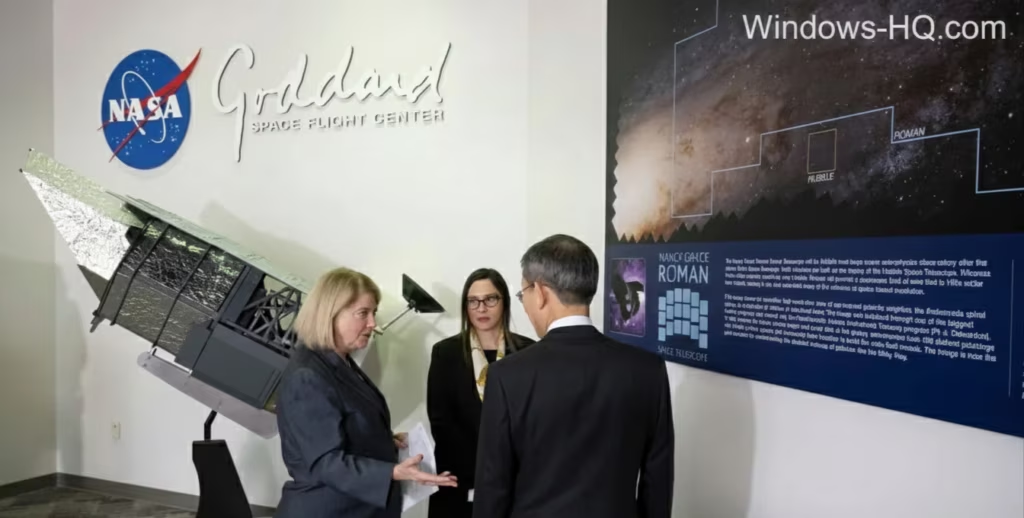
The Trump administration made a controversial decision to shutter NASA’s largest and most comprehensive research library, a move that has sparked outrage and concern within the scientific community. The library, officially known as the NASA Scientific and Technical Information (STI) Program collection, served as a vital resource for researchers, engineers, and academics worldwide, housing millions of documents related to aerospace, engineering, and related scientific disciplines.
The sudden closure raises questions about the administration’s commitment to scientific research and open access to information. Critics argue that the library’s closure represents a significant setback for scientific progress, potentially hindering innovation and collaboration within the aerospace industry and beyond. The STI Program collection contained a wealth of historical data, technical reports, and research findings that were essential for understanding past achievements and charting future directions in space exploration.
For decades, the library has played a crucial role in disseminating knowledge and fostering collaboration among researchers. Its vast collection included not only NASA-generated documents but also contributions from other government agencies, universities, and private sector organizations. This comprehensive approach ensured that researchers had access to a wide range of perspectives and insights.
The decision to close the library was reportedly based on budget constraints and a shift towards digital resources. However, critics argue that the physical library offered unique advantages, such as the ability to browse and discover materials that might not be easily found through online searches. Furthermore, concerns have been raised about the long-term preservation and accessibility of digital archives.
The library’s closure comes at a time when NASA is pursuing ambitious goals, including returning humans to the Moon under the Artemis program. Access to comprehensive research resources is critical for the success of such endeavors. The loss of the STI Program collection could make it more difficult for researchers to access the information they need to overcome technical challenges and develop innovative solutions.
The scientific community has expressed strong opposition to the library’s closure, with many researchers and organizations calling on the administration to reconsider its decision. Petitions have been launched, and letters have been sent to policymakers, urging them to protect this invaluable resource. The future of the STI Program collection remains uncertain, but the debate over its closure highlights the importance of preserving scientific knowledge and ensuring open access to information for the benefit of society.
While the administration argues that digital resources will replace the need for a physical library, many worry about the loss of serendipitous discovery and the potential for crucial documents to be overlooked in a purely digital environment. The physical library provided a unique space for researchers to immerse themselves in the history of aerospace and engineering, fostering creativity and innovation.
The closure of the STI Program collection represents a significant loss for the scientific community and raises concerns about the future of scientific research under the current administration. The long-term impact of this decision remains to be seen, but it is clear that the loss of this invaluable resource will be felt for years to come. NASA’s legacy is built on a foundation of knowledge and innovation, and the STI Program collection was an integral part of that foundation.