The Oura Ring 5 has been identified as the easiest smart ring to recommend due to its design, battery life, and premium app experience.
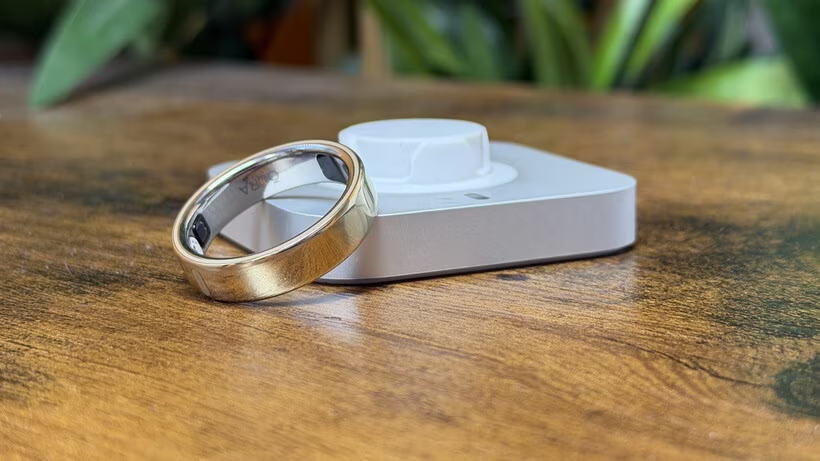
The device features a dramatically slimmer design compared to its predecessor, the Ring 4. Measuring 6.09mm in total width and 2.28mm in thickness, it is significantly smaller than the Ring 4’s dimensions of 7.9mm (width) and 2.88mm (thickness). This reduction makes it highly discreet and allows users to wear it comfortably on fingers other than the traditional index finger.
Its refined aesthetics have led some reviewers to conclude that the Oura Ring 5 looks more like a piece of jewelry rather than a gadget, potentially making smart rings more accessible for mainstream adoption.
The battery life remains strong, reportedly lasting up to nine days. Furthermore, despite its slimmer size, it offers robust tracking capabilities and features an all-encompassing companion app across both iOS and Android platforms.
The accompanying Oura app is noted for being polished and premium. Unlike apps that may overload the user with data, Oura structures information into manageable chunks.
Key functions include a readiness score—which synthesizes sleep performance, HRV, stress, and movement to indicate daily readiness—and a My Health tab, offering long-term views of health trends (such as stress management or heart health).
The ring offers advanced tracking capabilities, including AI-powered food tracking via photo snaps, Symptom Radar for potential illness alerts, and specialized women’s health features.
For general fitness and health monitoring, the Oura Ring 5 reportedly delivers accurate data. It is cited as being 24% more accurate in movement than the Ring 4, 19% more accurate in workouts, and 12% more accurate in HRV monitoring.
The device provides automatic exercise tracking for activities like runs or walks, even offering a GPS map overlay if a phone is nearby. It can also detect niche activities such as gardening.
However, the review highlights several limitations. The cost of the ring remains high, coupled with an ongoing subscription fee. Furthermore, while design improvements are significant, many new software features are currently limited to specific regions like the US and UAE.
Additionally, general fitness tracking cannot yet compete with a dedicated smartwatch, and there is no way for users to instruct the device to ignore certain automatically detected activities, such as showers.