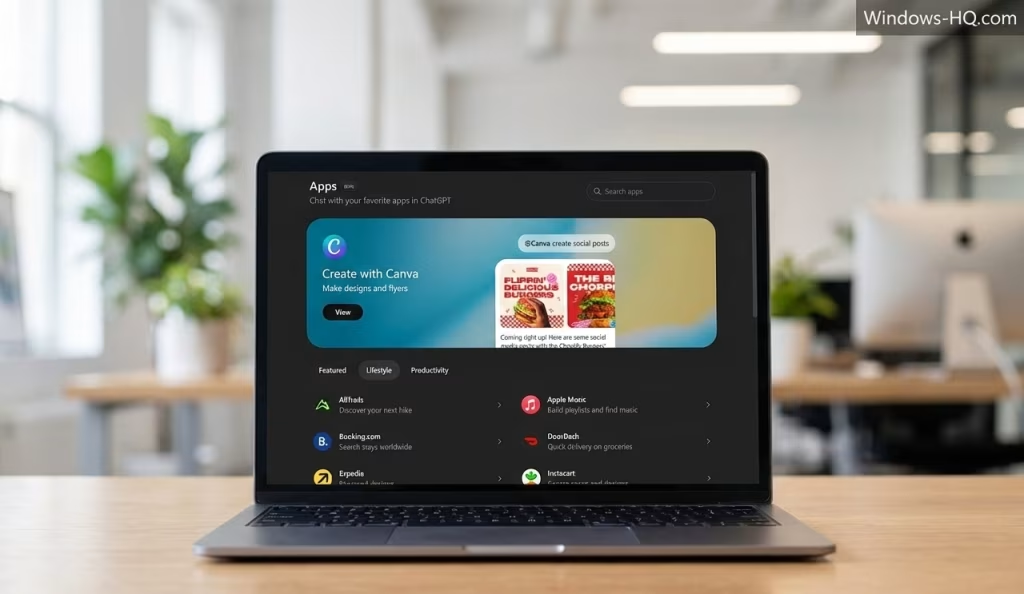
OpenAI has officially launched its App Directory, moving ChatGPT closer to becoming an “everything app” that can connect directly with popular third-party services like Apple Music and DoorDash. This major update includes the release of an SDK for developers, allowing them to create interactive experiences that function entirely within the chatbot’s user interface. OpenAI CEO Sam Altman previously indicated that the company planned to build a robust platform over time, and this app store represents a significant step in that direction.
Among the most notable new additions are the Apple Music and DoorDash apps. The Apple Music integration allows all users to discover music and create playlists, while subscribers can manage their music libraries without leaving the chat window. Meanwhile, the DoorDash app can transform meal planning and recipe ideas into an actionable shopping cart directly within the chatbot interface.
In addition to new features, existing apps are expanding their reach. The Spotify app for ChatGPT, which initially launched in October alongside tools for Zillow and other services, is now available in the United Kingdom, Switzerland, and throughout the European Union. This expansion reflects OpenAI’s push to make these interactive tools available to a broader global audience.
OpenAI has also rebranded its “connectors,” which previously allowed users to pull data from platforms like Google Drive and Dropbox. These are now referred to as “apps” to align with the new directory structure. For instance, chat connectors are now called “apps with file search,” while deep research tools have been renamed to “apps with deep research”.
The update also clarifies how these apps interact with user data and privacy. Apps may utilize information stored in ChatGPT’s Memory feature if it is enabled by the user. Furthermore, for users on Free, Plus, Go, and Pro plans, OpenAI may use data to train its models if the “improve the model for everyone” setting remains active.
While the platform is growing, the path to profitability remains a work in progress. OpenAI has stated that it is exploring various monetization options for the future, which may include the sale of digital goods. The company plans to share more details as it observes how both developers and users engage with the new ecosystem.
This shift toward a modular app-based system signals OpenAI’s intent to transform ChatGPT from a simple chatbot into a comprehensive digital hub. By allowing third-party services to operate natively within the UI, the company aims to streamline user workflows and centralize diverse digital tasks into a single, AI-driven interface.