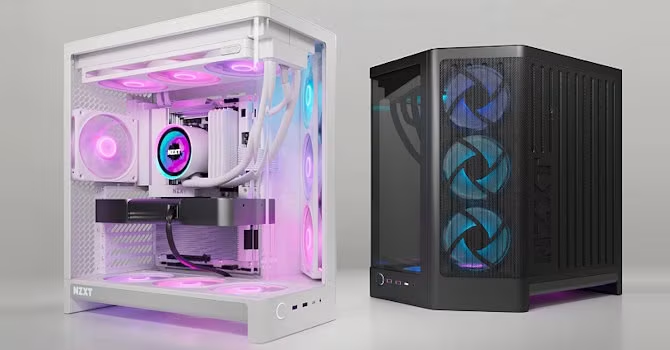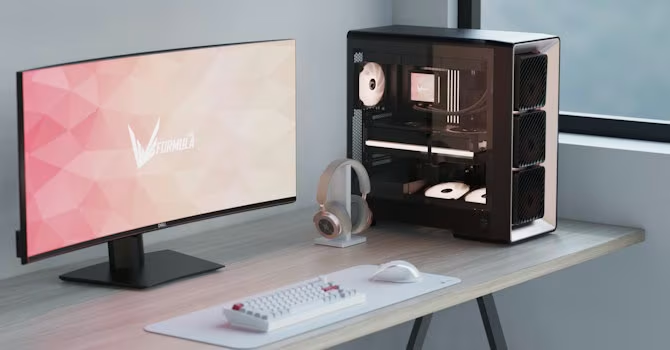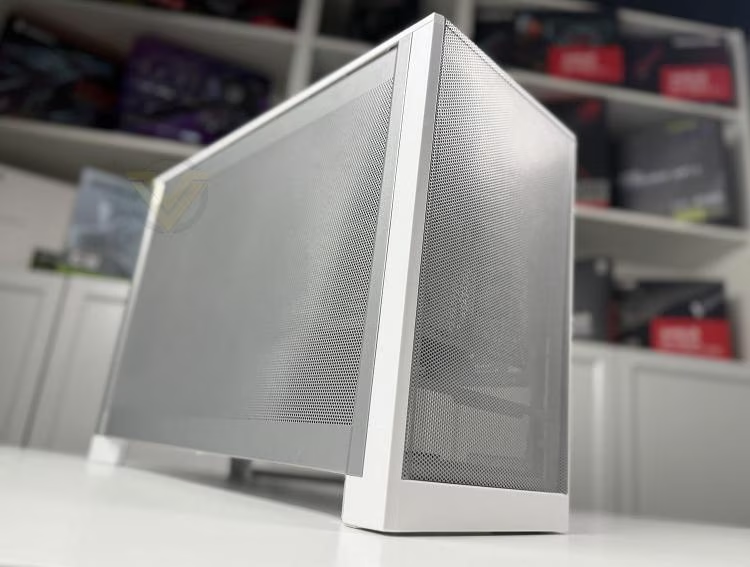
MONTECH has released the TEN case, a chassis whose design is heavily centered on maximizing cooling and airflow. The design features a highly ventilated mesh structure intended to maximize unrestricted airflow while maintaining a premium visual aesthetic.
The TEN employs a vertical thermal engineering approach, taking advantage of the natural chimney effect. This design facilitates pulling cool air from the lower intake zones and exhausting heat through the top of the case. Despite its compact size, the unit is capable of supporting high-performance hardware configurations, including extensive fan and radiator support, large graphics cards, and both ATX and SFX power supplies.
Reviewers note that the TEN succeeds by offering something genuinely different within the small-form-factor market. Instead of enforcing a single, restrictive layout, MONTECH designed the chassis to encourage user experimentation and flexibility, allowing builders to tailor the internal arrangement around their preferred hardware and cooling needs.
One of the most praised features of the TEN is its versatility. The chassis includes three distinct configuration modes, adding a degree of adaptability rarely found in compact enclosures. Furthermore, support for both Mini-ITX and Micro-ATX motherboards broadens its appeal considerably. GPU flexibility is also a major strength, as users can install large graphics cards in either horizontal or vertical orientations depending on the chosen layout.
The compatibility options are extensive. The ability to use either SFX or full-size ATX power supplies further reinforces the idea that the TEN accommodates a wide variety of system builds. Cooling support is equally robust, with numerous mounting locations provided for liquid cooling hardware, helping the TEN remain viable for high-performance gaming and workstation systems.
Practical features enhance the build process. The fully detachable exterior panels are noted for making access during assembly significantly easier, allowing builders to work from virtually every angle. The TEN also features decent I/O ports and its panels detach from the chassis.
However, the unit does present some compromises. The primary concern is cable management, which can become challenging, especially in more complex builds involving larger GPUs, ATX power supplies, or multiple radiators. Builders must exercise patience and detailed planning for clean cable routing due to the compact dimensions.
Additionally, while the overall airflow design is strong, the front section of the case lacks dedicated mounting points for cooling hardware, which is cited as a potential drawback. Despite these limitations, the TEN is considered to offer strong value for money, owing to its unique design approach, broad hardware compatibility, and highly adaptable internal structure. It is described as a case aimed squarely at enthusiasts who enjoy customizing and refining their builds.