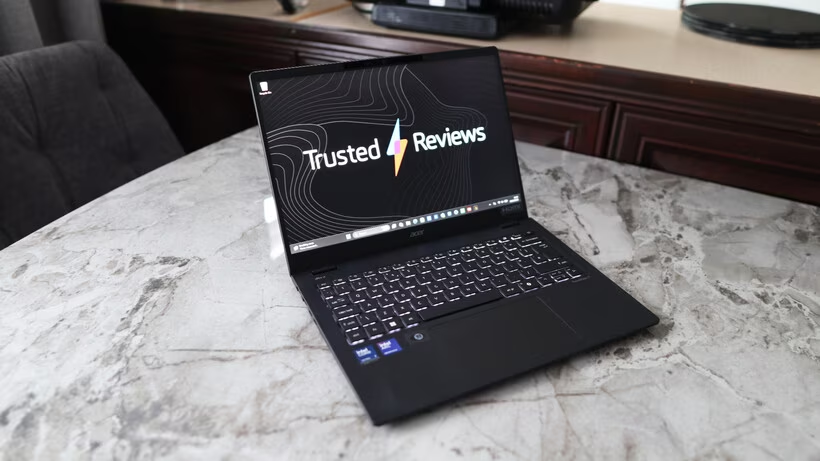
The Acer TravelMate P6 14 AI is presented as a capable Windows business laptop, featuring a Lunar Lake processor and a competent combination of port selection, a lightweight chassis, and excellent battery life. For its £1599.99 price tag, the device is noted as a solid option in the current market, particularly when compared to rivals like the Lenovo ThinkPad T14s 2-in-1 Gen 1 and Dell Pro 14 Premium, which are considerably more expensive.
The laptop tips the scales at less than a kilo, positioning it among the lighter options in its category. Under the hood, it houses a potent eight-core Intel Core Ultra 7 258V processor, which provides a solid amount of power for productivity tasks. Complementing this is a capacious 65Whr battery, designed to power the laptop through a working day or two away from mains power.
In terms of build quality, the TravelMate P6 14 AI combines a carbon fibre lid with magnesium-aluminium alloy for the remaining chassis components. This blend of materials allows the laptop to weigh only 990g, maintaining a sleek aesthetic without any noticeable flex or bend. The laptop is equipped with a backlit keyboard that features a snappy, short tactile travel, making it comfortable for extended use.
The port selection is described as strong for most use cases. On the left side, users find a pair of Thunderbolt 4-capable USB-C ports, alongside a USB-A and an HDMI port. The right side offers another USB-A, a headphone jack, and a security slot. The device also runs Windows 11 and includes enterprise-centric applications such as Acer’s TravelMateSense app, which provides features like file shredder, USB device filter, and built-in file encryption.
Regarding the display, the TravelMate P6 14 AI is fitted with an IPS panel, rather than an OLED option. It features a solid 14-inch screen with a 3K (2880×1800) resolution and a refresh rate of upwards of 120Hz. The panel exhibits reasonable deep blacks, a 1260:1 contrast ratio, and a near-perfect 6600K colour temperature. Peak SDR brightness was measured at 471.2 nits.
Performance testing shows the Core Ultra 7 258V processor is an eight-core and eight-thread chip with a boost clock up to 4.8GHz, designed to offer significant power while prioritizing endurance and longevity.
Battery endurance testing demonstrated strong performance. When the brightness was dialed down to 150 nits and running the PCMark 10 Modern Office benchmark, the laptop managed to run for 17 hours and 59 minutes. This result positions the device among its Lunar Lake-powered contemporaries, making it viable for two working days away from the mains.
Powering the laptop is a 100W power brick. While the 38 minutes required to reach 50% charge is reported as good, the total time for a full charge is noted as being a little more middle of the road at 94 minutes.
In the competitive landscape, the Asus Zenbook A14 (2026) is cited as a comparably priced alternative that offers similar performance and endurance, utilizing a Qualcomm Snapdragon X2 Elite processor, a sub-1kg weight, and an OLED screen. However, the report notes that the Acer TravelMate P6 14 AI is perhaps more likely to fulfil the requirements of enterprise users than the more consumer-grade Zenbook.
Dell’s new XPS 14 (2026) base model configuration is also mentioned as matching the TravelMate P6 14 AI in price. While a serious contender, the XPS 14 reportedly sacrifices some portability and ports compared to the Acer or the Asus.