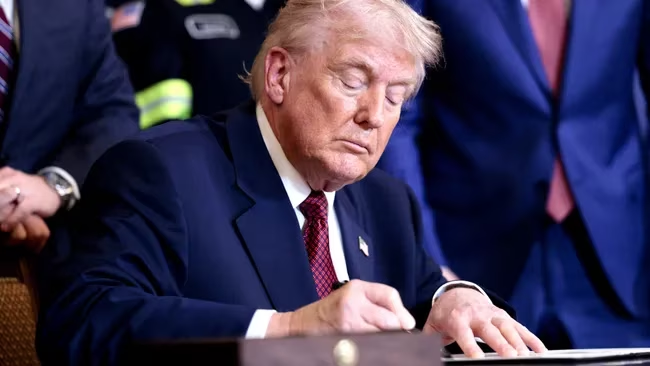
President Donald Trump is expected to sign an executive order titled “Promoting Advanced Artificial Intelligence Innovation and Security.” This order represents the US government’s effort to exert broad control over AI development.
The measure, which aims to regulate AI, would demand that major AI companies provide access to their Frontier Models for a period of 30 days before the models are publicly released. Since no national US regulations currently exist for AI, this move constitutes the first whiff of widespread federal oversight in the area.
While several major AI corporations, including Meta, OpenAI, and Anthropic, reportedly support the order, they also appear surprised by its casual signing and have yet to provide a formal comment.
The source notes that concerning timing, OpenAI co-founder and CEO Sam Altman posted a Bible verse on X (formerly Twitter) near the time of the order’s announcement.
Other concerns cited include potential slowdowns in AI progress due to required vetting by US government agencies such as the Department of War and the NSA. Given that new models are released almost monthly, these delays could potentially cause the US and its major companies to fall behind a crucial global race against competitors like China.
The discussion surrounding this move includes suggestions that Anthropic may have influenced efforts to manage AI growth following the release of its Mythos model, which was described as having potential cybersecurity-breaking capabilities.
Although the order ostensibly targets threats to cybersecurity or infrastructure, the provided text notes that it does not specify how these agencies will conduct their work.
The article also highlights the unusual nature of requiring commercial software to undergo government vetting, a practice traditionally associated with countries like China. This has drawn comparisons to the US concern over ByteDance developing the TikTok algorithm.
The piece raises questions about potential future controls, speculating whether the US government might demand that Frontier models be vetted for compliance regarding DEI (Diversity, Equity, Inclusion) principles or if they could scrutinize responses that contradict established White House policies.