US President Donald Trump has issued a severe warning to Iran, threatening to expand military targets and hit the country “very hard,” following a public apology from Iranian President Masoud Pezeshkian to neighboring nations for recent military strikes.
In a statement posted to social media, Trump claimed that Iran’s apology amounted to a surrender to its Middle Eastern neighbors. He attributed Tehran’s concession to the ongoing and relentless military campaign conducted by the United States and Israel.
Trump further stated that Iran is no longer the “bully” of the region but rather the “loser of the Middle East.” He warned that new areas and groups of people are under serious consideration for targeting, citing what he described as Iran’s continued bad behavior.
The escalation in rhetoric comes shortly after Iranian President Pezeshkian issued a televised apology to nearby Gulf states. During his address, Pezeshkian announced that Iran’s interim leadership council had instructed the armed forces to cease firing missiles at neighboring countries unless an attack against Iran originates from those territories.
Despite the conciliatory message directed at regional neighbors, Pezeshkian maintained a defiant stance toward Washington. He explicitly rejected Trump’s recent demand for an “unconditional surrender,” characterizing the expectation as a dream that US officials would take to their graves.
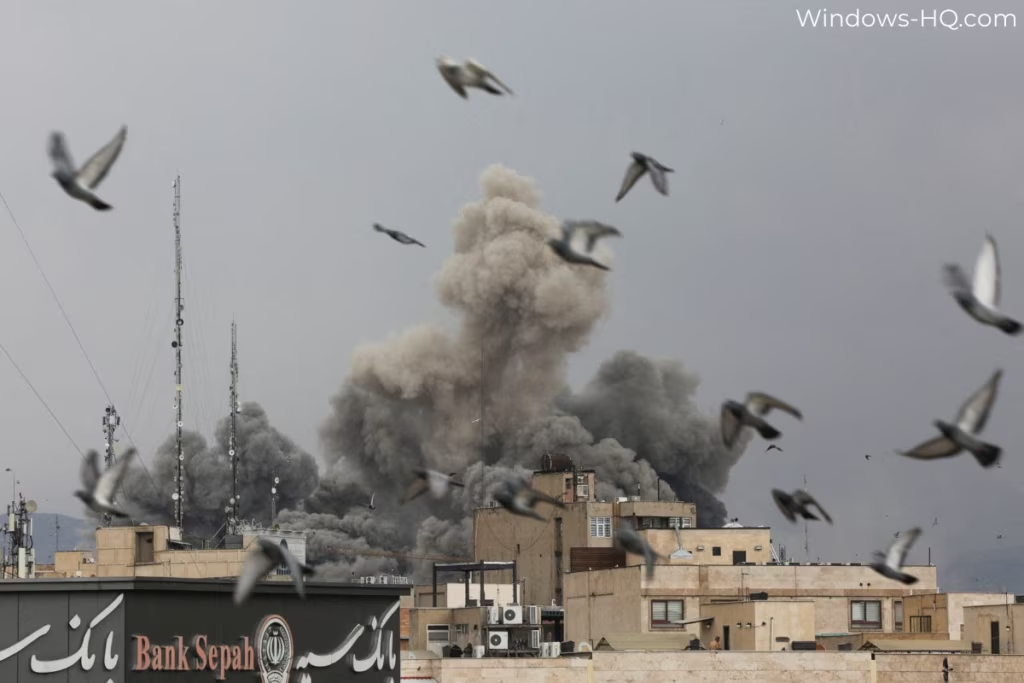
The diplomatic and military exchange highlights the intensifying conflict that commenced on February 28, following a joint US-Israeli military campaign. The initial wave of airstrikes resulted in the death of Iran’s Supreme Leader Ayatollah Ali Khamenei, triggering a severe regional escalation.
In retaliation for the allied bombings, Iranian forces launched a series of missile and drone attacks targeting Israel and US interests across the Middle East. These retaliatory strikes impacted multiple nations, including the United Arab Emirates, Bahrain, and Saudi Arabia.
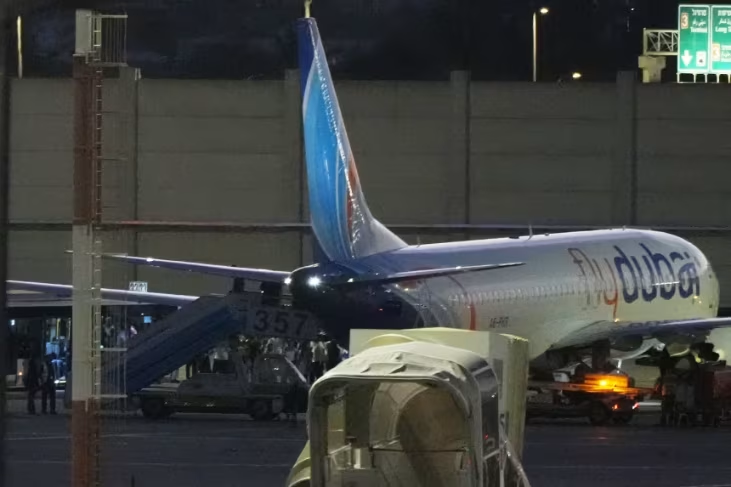
The ongoing hostilities have significantly affected global markets and regional stability. Commercial aviation has faced severe disruptions across the Gulf, with major airlines suspending flights to and from key transit hubs such as Dubai.
Within Iran, Pezeshkian’s apology has sparked internal debate and pushback. Hardline political and media figures have openly criticized the president’s decision to halt the “fire at will” strategy, interpreting the de-escalation with neighbors as a sign of weakness during a critical period of leadership transition.
Meanwhile, US defense officials have signaled no intention of scaling back the offensive, known as Operation Epic Fury. The administration has reportedly approved new arms sales to Israel, while military leaders warn that the most intense bombing campaigns of the conflict may still be forthcoming.”,
“focus_keywords”: “Donald Trump Iran Masoud Pezeshkian Middle East strikes