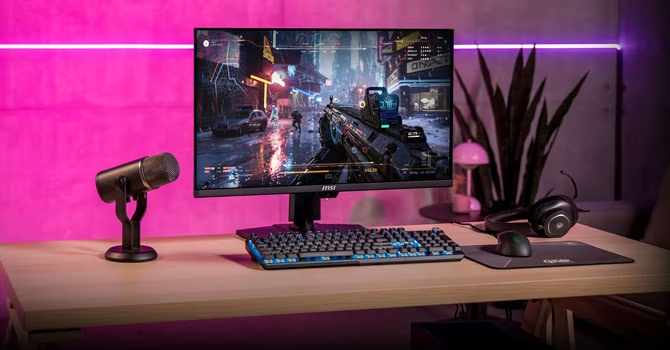
The MSI MPG 271QR QD-OLED X50 is a 26.5-inch 1440p gaming display designed specifically for competitive players prioritizing motion clarity and input responsiveness.
It features Samsung Display’s third generation QD-OLED panel technology, which utilizes EL Gen 2 emissive materials and a refined triangular RGB subpixel layout. This generation of panel has been pushed to achieve an extremely high refresh rate of 500 Hz.
The display’s technical specifications are substantial. It supports a DisplayPort 2.1a interface with UHBR20 bandwidth, capable of transmitting a 2560×1440 signal at 500 Hz using 10-bit color without requiring Display Stream Compression (DSC). Additionally, two HDMI 2.1 ports also support 1440p at 500 Hz.
Connectivity options are robust, including a USB-C port providing DisplayPort Alt Mode and 98 W power delivery. The monitor is also equipped with a 5 Gbps USB hub and a full KVM switch.
In terms of performance, the device boasts an average perceived response time of 0.64 ms and an average on-display input lag of 1.45 ms at 500 Hz. Its SDR brightness reaches over 300 cd/m², while HDR performance can peak at 1,026 cd/m², achieving VESA DisplayHDR True Black 500 certification.
To support extended usage, the unit includes the AI Care Sensor and OLED Care 3.0 suite, featuring presence detection, adaptive dimming, and an extended 24-hour mandatory panel refresh interval.
One notable feature is the 24.5-inch aspect ratio mode. This option allows esports players to simulate a smaller 24.5-inch active image area while maintaining the full 500 Hz refresh rate, though the source notes that sharpness is reduced due to the lower effective pixel density.
At a premium asking price of $900 or approximately 850 euros, the MPG 271QR QD-OLED X50 is marketed as one of the fastest QD-OLED panels available. The consensus suggests that while the 500 Hz refresh rate is a significant advantage for competitive players, the monitor may not be the best all-around 27-inch OLED, suggesting balanced options exist for mixed-use workflows.