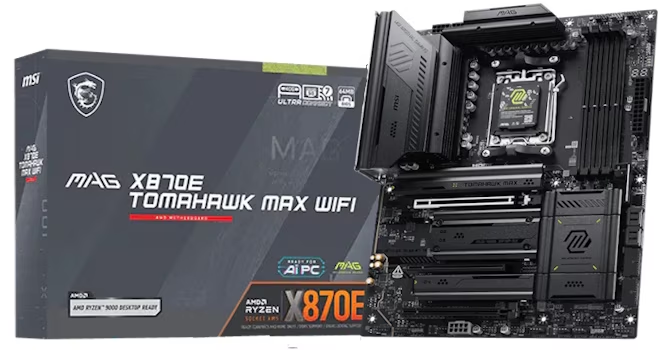
The MSI MAG X870E Tomahawk Max Wi-Fi is a refreshed motherboard that is mostly identical to the original MAG X870E Tomahawk Wi-Fi, an option known for its value within AMD’s X870E chipset lineup. The Max version retains the premium hardware and performance of its predecessor while introducing a few additional features.
One of the primary hardware changes is a doubled BIOS size, which has increased to 64 MB. This expanded capacity allows motherboard drivers to be integrated directly while offering potential for better future CPU support and additional features. It also provides a slightly slicker Windows installation process for Wi-Fi users.
Despite the capacity increase, the 64 MB BIOS currently offers limited immediate perks. The next generation of AMD processors will remain compatible with older motherboards utilizing a 32 MB BIOS, and other concrete benefits of the expanded size have yet to be demonstrated.
The motherboard introduces independent base clock overclocking paired with preset profiles. This addition allows users to boost the base frequency without impacting the performance or stability of the rest of the system, offering a simplified approach through MSI’s presets without locking into a manual overclock.
To facilitate this on the fly within Windows, the PCB features base clock adjustment pins. However, because these are standard pins requiring a jumper or momentary switch, they are not highly accessible. The board lacks integrated or installable buttons for this function, a decision likely due to the niche nature of base clock tweaking.
Retaining the best aspects of the original model, the Max Wi-Fi maintains decent VRM and SSD temperatures, though cooling on the second PCIe Gen 5 M.2 port is less effective. The board features minimal PCIe lane sharing, USB4, and support for PCIe Gen 5 GPUs and M.2 drives.
PC building conveniences are also present, including two tool-free M.2 heatsinks out of the three available. The board includes the unique EZ Conn header and EZ Front Panel Cable, alongside a generous variety of fan headers and USB ports.
A standout inclusion is the 27 W power delivery over the Type-C front panel header. This enhanced power output provides practical utility for charging smartphones and similar devices directly from the front panel.
In terms of competition, the MAG X870E Tomahawk Max Wi-Fi remains one of the more affordable options utilizing the twin X870 chipsets of the X870E platform. Comparatively, Gigabyte’s X870E Aorus Pro is similarly priced but lacks enhanced power delivery over the Type-C header, features slower Ethernet, and utilizes a more dated EFI. The ASRock AMD X870E Taichi Lite is cheaper but offers a more basic feature set and an inferior EFI.
Other alternatives include the ASUS TUF Gaming X870E-Plus Wi-Fi7, which is slightly cheaper but features lackluster cooling and lacks some modern amenities. The ASUS ROG Strix X870E-H Gaming Wi-Fi costs more and offers a slightly better EFI and a thermistor header, yet it struggles to cool double-sided PCIe Gen 5 SSDs. Significant gains in features or aesthetics require spending around $100 more on models like the Gigabyte X870E Aorus Elite X3D Ice or the upcoming MSI MPG X870E Carbon Max Wi-Fi.
With a suggested price of around $320, the Max Wi-Fi contends directly with its non-Max predecessor, which currently costs approximately $300. As long as the price difference remains within the $20 to $30 range, the refreshed model serves as a solid hardware choice, despite not adding anything revolutionary to the lineup.