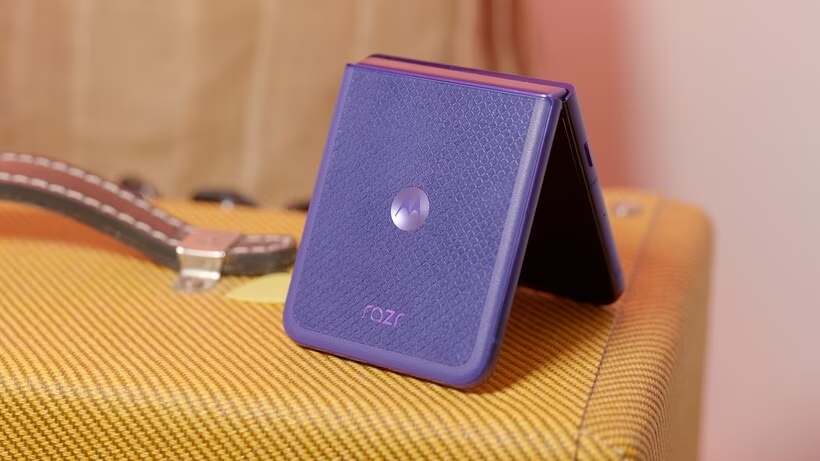
The Motorola Razr 70 Ultra is positioned as a premium flip foldable phone. Despite its advancements, the device faces questions regarding its overall value compared to its predecessor, the Razr 60 Ultra.
On paper, the Razr 70 Ultra does not represent a significant leap from the previous model. It shares the same processor chip as its predecessor and maintains a similar overall design. Key upgrades include a slightly bigger battery and a higher price point compared to last year’s model.
Reviewers note that the core argument for purchasing the phone is the design, particularly its pocket-friendly, palm-friendly feel, and curved edges, which prevent a sharp, uncomfortable feel. The device is compact, lightweight, and easy to hold and use one-handed.
The cover screen is highlighted as a major selling point, described as bright and responsive. It allows users to perform tasks without unfolding the phone. This external screen is easy to use and navigate, making it a standout feature of the device.
The phone is equipped with a 5000mAh battery, which the source states easily lasts a full day. It also supports fast 68W charging for quick power top-ups. The battery capacity is noted as being slightly higher than the previous model and is said to be more capable of lasting a full day than its Samsung equivalent.
Regarding the display, it features an LTPO panel that can reach up to 165Hz for gaming, ensuring that it remains fluid, smooth, and responsive in most settings. The cover screen similarly utilizes high and low refresh rates to maintain smoothness and minimize battery drain during standby or always-on functions. Motorola’s software is described as vanilla, with settings and quick controls being similar to those found on Google’s Pixel phones, offering little bloat and good customization options.
However, the review points out several drawbacks. The design features, such as the textured grooves and channels on the back and the metal rings around the camera, are prone to gathering dust, lint, and microdebris. Furthermore, a gap between the two display halves can collect dust and fluff on the protective film.
Other usability concerns include the fact that the folding panel still looks and feels quite narrow. Additionally, the software interface spacing and text size can feel too small with too much space between elements, which was particularly noticeable when shooting photos or videos.
While acknowledging that foldable phones are inherently limited by space, the review notes that the cameras, while potentially expensive, do not feature the largest sensors and lenses, especially in compact flip-style designs.
Ultimately, the consensus is that while the Razr 70 Ultra is a powerful, highly functional, and generally good device—with a lovely design and solid battery life—it does not significantly move the formula forward. The internal screen remains quite narrow, Moto AI offers little real value, and the camera and software experiences do not feel meaningfully better than the preceding model. Consequently, the reviewer suggests that the previous model remains a more tempting option if available at a lower price point.