Microsoft recently retracted a support document that pushed 32GB RAM as the ideal upgrade for gaming on Windows 11. This document was originally titled “Gaming features: What the best Windows PC gaming systems have in common.” The document, which was initially spotted by Windows Latest, contained messaging that built a narrative around increased memory requirements. Specifically, Microsoft noted that while “16GB RAM is a practical starting point,” moving to 32GB RAM was recommended for running tools like Discord, browsers, or streaming alongside games, adding that extra memory also gives newer titles more breathing room as demands rise. The guide further stated that “16GB RAM is the baseline; 32GB is the ‘no worries’ upgrade,” according to the source material.
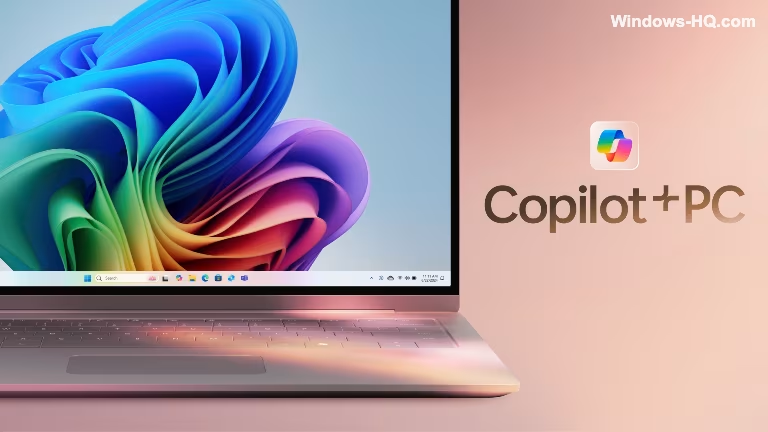
This guidance was subsequently picked up by gaming outlets and the broader community, leading to negative reception, especially given the current high cost of RAM. The message also created confusion since Microsoft’s official Windows 11 system requirements still list a minimum of 4GB RAM, while typical consumer PCs are often sold with 8GB of RAM. Furthermore, Microsoft has been focusing heavily on promoting Copilot+ PCs, which mandate 16GB of RAM.
Facing backlash, Microsoft quietly removed the support document, redirecting the URL to the Learning Center’s homepage and blocking web archives from surfacing the retracted content. While the company has not provided details regarding the move, the action suggests an effort to prevent the document from spreading further.
This is noted as a pattern, as Microsoft had previously published a similar document in February that also advocated for 32GB RAM for gaming. The trend has been reinforced by Microsoft suggesting that Copilot+ PCs are built for gaming. The overall message appears to push users toward 32GB RAM, coinciding with Microsoft’s AI push, which may be contributing to increased memory prices.
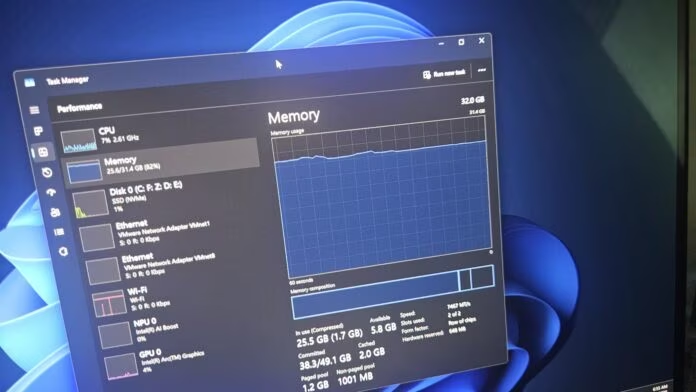
It is noted that Windows 11 has a memory utilization issue, largely attributed to the dominance of Electron-based apps and WebView2 in the app store. Microsoft officials have acknowledged working to optimize Windows for low-RAM devices and aiming to win back users. Despite the recent controversy, Microsoft has confirmed it is developing a list of improvements, including performance and File Explorer reliability, intended to reduce Windows 11’s current RAM consumption.