The latest reviewed laptop is presented as a powerful choice featuring the Snapdragon X2 Elite SoC, complemented by an OLED display, comfortable keyboard, and notable battery endurance.
However, potential buyers should note that while it offers significant power, the top configuration is quite expensive, and its port selection has been described as one-dimensional.
In terms of pricing, the device starts at £1050/$1199 for a base Snapdragon X2 Plus model. The fully reviewed 32GB RAM/2TB SSD configuration costs £1669.99/$1899.99.
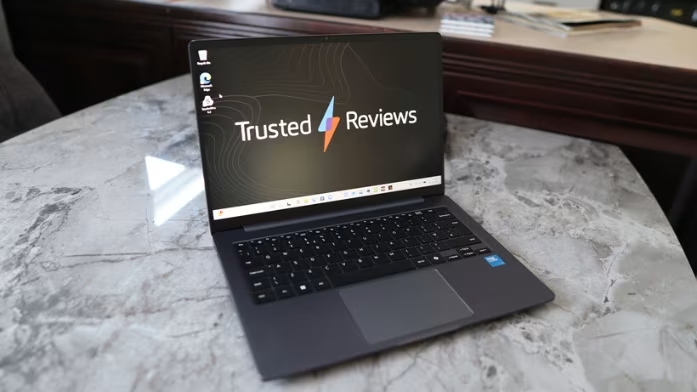
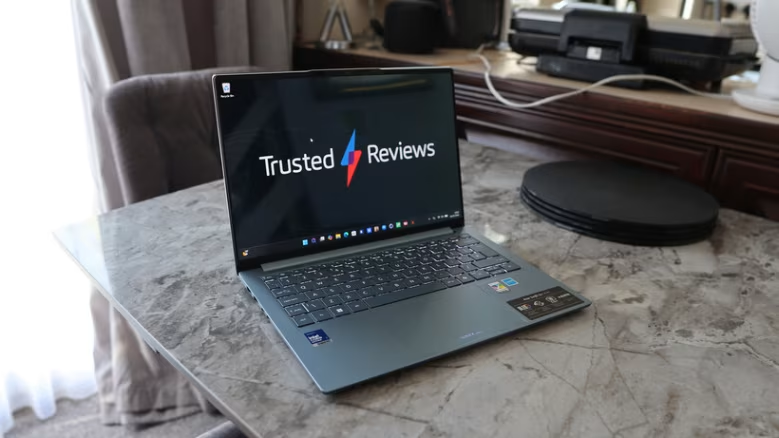
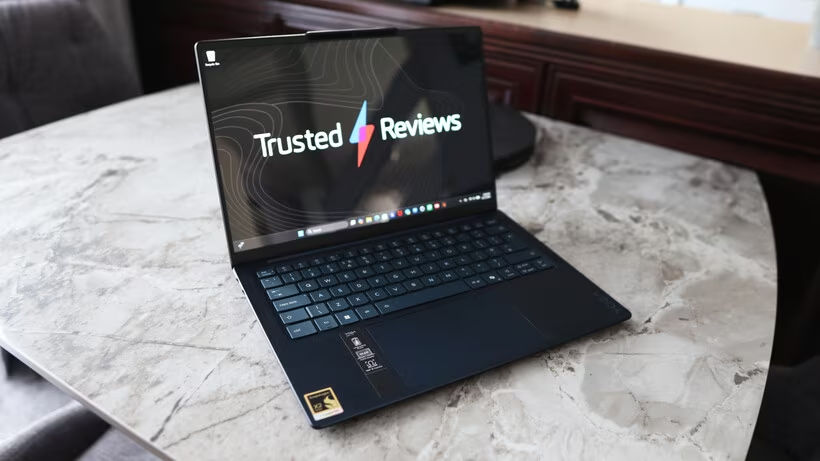
Design-wise, it retains its dark blue metal chassis and maintains a weight of 1.17kg with a thickness of 13.9mm, resembling a “midnight blue MacBook Air.” The port selection is limited to three USB4-capable Type-C ports—modern and fast, but considered less versatile compared to rivals like the Asus Zenbook A14 (2026).
The keyboard features a quiet, tactile scissor-switch design with deep-dish keycaps and white underglow backlighting. The trackpad is noted for being glossy and roomy.
Regarding the display and sound, two OLED options are available. The base model includes a 1920×1200 60Hz touch panel, while the reviewed version features a superior 2880×1800 (3K) 120Hz non-touch panel with a lay-flat hinge.
The measured display specifications include a 0.03 black level, a 17,250:1 contrast ratio, and 6700K colour temperature. It delivers 480.2 nits peak SDR brightness and provides 100% sRGB/DCI-P3 plus 92% Adobe RGB coverage.
The audio system utilizes an upward-firing four-speaker array (composed of two woofers and two tweeters), delivering rich sound quality for a laptop.
Performance is driven by Qualcomm’s new Snapdragon X2 Elite (18-core variant tested). While its boost clock speed sits slightly below the Elite Extreme (4.7GHz versus 5GHz), it demonstrates strong Geekbench 6 single-core scores nearing Apple Silicon territory, alongside improved multi-core and Adreno iGPU performance.
The device’s throughput metrics are impressive: the 2TB SSD achieved read speeds of 7144.32 MB/s and write speeds of 6721.86 MB/s.
The operating system is a clean Windows 11 install, incorporating Copilot+ PC features like Windows Studio webcam effects and Recall. Software usage, including Photoshop and benchmarks, performed satisfactorily despite being Arm-based and having minor app-compatibility quirks via Prism translation.
Battery longevity is a key strength; the unit lasted 19 hours and 42 minutes during the PCMark 10 video-loop test, matching both the Acer Swift Edge 14 AI and the prior Zenbook A14. The charging routine requires a 65W charger to reach 50% charge in approximately 40 minutes and full charge in roughly 75 minutes.
In the competitive landscape, rivals include the Asus Zenbook A14 (2026), which undercuts this model at £1599 with the same chip but a lower-resolution screen. The Acer Swift Edge 14 AI is positioned as the cheapest option at £1399, equipped with an Intel Lunar Lake chip and offering richer port selection.